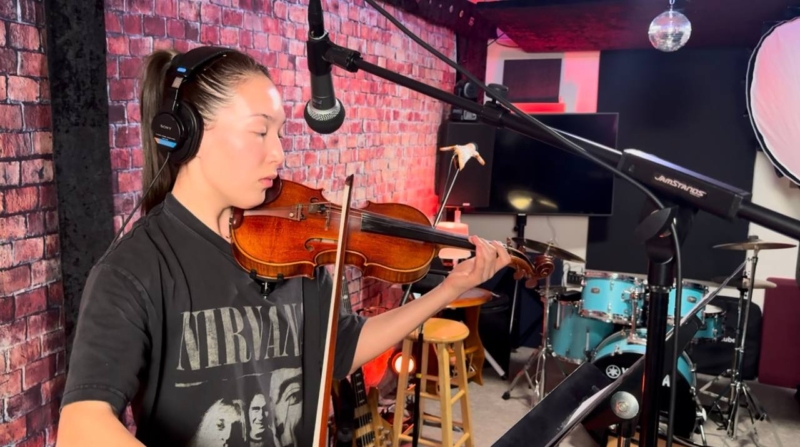
In an era defined by scrolling feeds and 15-second attention spans, classical music is undergoing a quiet but powerful transformation. Once perceived as exclusive and distant, the genre is now reaching new audiences through digital platforms that prioritize immediacy, emotion, and visual storytelling. With record engagement among Gen Z and Millennials, driven largely by short-form content, the question is no longer whether classical music can survive in the digital age, but how it can preserve its depth while adapting to it. In this interview Earmilk explores that tension through the perspective of violinist Shynar Nagimova, whose career reflects the evolving identity of a modern classical musician.
An award-winning international performer with a foundation in rigorous academic training, Nagimova represents a new generation of artists redefining success beyond traditional concert halls. From early beginnings in a specialized music school at age five to performing on global stages and winning major competitions in New York and Los Angeles, her journey bridges discipline and innovation. Today, she combines performing, teaching, community work, and a growing digital presence, embodying the “portfolio musician” model that defines the industry’s future. Her work, including developing a method that connects classical technique with modern repertoire, highlights a broader shift: classical music is not losing its essence, but expanding its language. Through her experience, we see how tradition and technology can coexist, ensuring that even in a fast-moving digital culture, the emotional and artistic core of classical music remains intact.
How do you see classical music evolving in response to the rise of short-form platforms popular with Gen Z?
I believe classical music is evolving by becoming more accessible and visually engaging through short-form platforms like TikTok and Instagram. Gen Z often discovers music through quick, emotional, and visually driven content, so classical musicians now have the opportunity to introduce pieces in a more relatable way. Short clips of performances, practice moments, or behind-the-scenes rehearsal footage can make classical music feel less intimidating and more personal. These platforms also allow artists to explain the stories behind compositions, helping younger audiences connect emotionally with the music. I think classical music is not losing its depth—it is simply adapting its presentation. Short-form content can act as a gateway that inspires people to explore full performances and concerts later. In many ways, it helps preserve classical music by introducing it to audiences who may not have encountered it otherwise.
How can musicians maintain artistic integrity while adapting to fast-paced digital consumption?
Musicians can maintain artistic integrity by staying true to their unique style and values while using digital platforms to share their work. Adapting to fast-paced content does not mean changing the quality of the music—it means presenting it in a way that captures attention quickly. Short clips can introduce audiences to deeper artistic work rather than replace it. Platforms like TikTok and Instagram can be tools for connection without sacrificing authenticity.
What opportunities has social media created for classical musicians that didn’t exist before?
Social media has given classical musicians direct access to global audiences without needing traditional gatekeepers. Platforms like Instagram and TikTok allow artists to share performances, build personal brands, connect with fans, and collaborate with musicians worldwide. It also creates opportunities for teaching, networking, and gaining recognition more quickly.
How did your early training shape your ability to adapt to modern formats and audiences?
My early training began when I was five years old in a traditional Russian-style music school environment, which gave me strong discipline, technique, and respect for classical foundations. At the same time, listening to jazz, bossa nova, pop, and modern music became a way for me to relax and simply enjoy music in a different form. This balance helped me stay open-minded and adaptable. Because of that contrast, I learned how to appreciate both structure and creativity, which makes it easier for me to connect with modern audiences today.
How have the standards of success for classical musicians changed in recent years?
Success for classical musicians is no longer based only on competitions, orchestras, or concert halls. Today, it also includes building an online presence, connecting with audiences, and being versatile across different styles and platforms. Social media platforms like Instagram and TikTok have created new ways for musicians to gain recognition and share their work globally. Modern success often combines artistic excellence with visibility and personal branding.
Beyond technical skill, what qualities define a successful musician today?
Beyond technical skill, a successful musician today needs creativity, adaptability, and strong communication with audiences. Musicians are expected to build a personal identity, connect emotionally with listeners, and stay open to different styles and platforms. Consistency, professionalism, and the ability to share their story through platforms like Instagram also play an important role in building a lasting career.
How important is personal branding in building a classical music career?
Personal branding is very important in building a classical music career today because it helps musicians become visible beyond traditional concert settings. Through sharing videos online, I was contacted by a composer who wanted to write a violin piece for me and feature my performance in his video. Social media platforms like Instagram make networking much easier and create opportunities that might not happen through traditional channels alone. I also think that if musicians in the 16th–19th centuries had access to the internet, we might know many more talented artists today.
What role does audience engagement play in shaping your professional identity?
Audience engagement means a lot to me because music is a way of expressing emotions and creating connection. I do not see it as seeking approval, but more as finding a mirror in others—when someone relates to my performance, it shows that I captured a feeling they may not have been able to express themselves. The response from listeners helps shape my professional identity because it reminds me that art is about communication and shared emotion. Knowing that people connect with and admire my work gives purpose to what I do and motivates me to keep creating.
You balance performing, teaching, and community work, how do these roles influence each other?
Balancing performing, teaching, and community work helps me stay open-minded and flexible. Each role influences the other because they all involve connection, creativity, and learning from different people. Teaching keeps me patient and aware of different perspectives, performing keeps me inspired artistically, and community work reminds me of the wider impact music can have. I think staying open to different experiences is what keeps enthusiasm alive—you always find something new to explore and appreciate.
What impact does early exposure to classical music have on young audiences?
Early exposure to classical music can teach young audiences discipline, patience, and responsibility. When children practice regularly or complete music homework, they learn how to work toward goals and stay consistent. Having something to prepare or finish by a deadline helps engage different parts of the brain and encourages focus. Even if they do not continue music later in life, the experience still gives them a lasting connection to art and culture. They can always look back and remember that music was a meaningful and enjoyable part of their childhood.
What inspired you to develop your own method for arranging and performing popular music on a classical foundation?
My inspiration came from performing from a very young age. Since I was five, I played at large Kazakh weddings, where I was exposed to popular music that connected with audiences. By the age of twelve, I realized I could earn money through music and even buy things for myself, like my first iPod, which made music feel both artistic and practical. Later, during college, I performed at my favorite coffee shop, where we played bossa nova and other modern styles that I really enjoyed. At that time, it was difficult to find sheet music or arrangements for many popular songs, so I often had to create my own versions by ear and write them myself. That process became both creative and educational, and it strengthened my arranging skills while helping me build a bridge between classical technique and modern music.
What would you like the next generation to understand about the value of classical music?
I would like the next generation to understand that classical music is not only about tradition or technique—it is about emotion, storytelling, and personal expression. It teaches patience, discipline, and the ability to listen deeply. Classical music can also connect people across different cultures and time periods, showing that human emotions remain universal. Even if someone does not become a professional musician, having a connection to classical music can bring inspiration, creativity, and a deeper appreciation for art.
Connect with Shynar Nagimova: INSTAGRAM