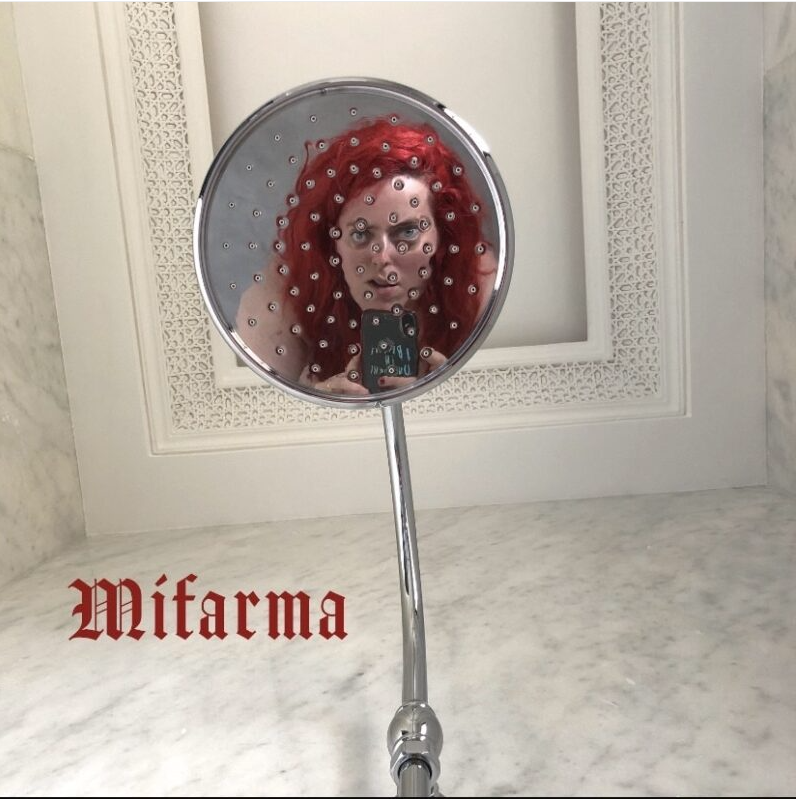
There's a particular kind of album that arrives without fanfare and lodges itself somewhere behind your sternum. Danielle Alma Ravitzki's Mifarma is that breed of record—the kind that doesn't announce its intentions but slowly rewires how you think about vulnerability in music.
What Ravitzki has assembled here defies the conventions of the therapeutic album. While countless artists mine their suffering for stadium-sized emotional payoffs, Mifarma takes the opposite approach: it zooms in on the granular, often boring reality of what it means to survive something that nearly destroyed you. There's no triumphalism here, no inspirational arc from darkness to light. Instead, these songs inhabit the gray zone where most people actually live when they're doing the difficult work of staying functional.
The sonic architecture, crafted in collaboration with producer Carmen Rizzo, operates on principles of subtraction rather than addition. Where you'd expect swells, you get restraint. Where other records would pile on instrumentation for emphasis, Mifarma pulls back, letting individual sounds exist in their own negative space. Electronic pulses don't dominate—they flicker at the edges like malfunctioning streetlights. Acoustic elements appear tentatively, as if testing whether they're welcome. The result feels less produced than excavated, like these arrangements were discovered rather than constructed.
Ravitzki's vocal approach is equally stripped down. She's not interested in showcasing range or technique—every line feels like it's being spoken directly into your ear at three in the morning when defenses are down and pretense seems exhausting. There's an intimacy here that borders on uncomfortable, the kind that makes you wonder if you should be listening to something this unguarded. She sounds like someone who's given up on impressing anyone and found strange freedom in that surrender.
The lyrical content traffics in specificity over symbolism. Ravitzki fixates on the physical world—textures, locations, bodily sensations—in ways that ground the album even when its soundscapes float toward the ethereal. When she writes about disconnection from self, it's not in flowery metaphor but in stark, almost clinical observation. It reads like field notes from someone documenting their own psychological terrain with scientific detachment, which makes the emotional impact hit even harder.
Across these eight compositions, Mifarma documents what recovery actually looks like when you strip away the Instagram-friendly version. The regression, the stagnation, the days where getting out of bed counts as achievement—it's all here, rendered without judgment or dramatization. Songs circle back on themselves, mirroring how trauma processing rarely moves in straight lines. The pacing is deliberately patient, almost frustratingly so, refusing to rush toward resolution because resolution remains elusive.
Instrumentally, the palette stays narrow by design. Percussion surfaces sporadically, functioning more as atmospheric punctuation than rhythmic foundation. Piano operates in fragments, incomplete thoughts that trail off before forming coherent statements. When orchestral elements materialize, they do so cautiously, seeming to understand that emotional grandeur would feel dishonest in this context. Everything serves the larger mission of accuracy over entertainment.
The commitment to this aesthetic creates both the album's power and its occasional limitation. The unrelenting quietness, while thematically appropriate, sometimes blurs distinctions between individual tracks. A listener could reasonably wish for more dynamic variation, some moment where the tightly controlled framework cracks open. But that wish might miss the point—Mifarma isn't trying to provide relief or release. It's offering recognition.
What Ravitzki has achieved here is increasingly rare: a document of psychological distress that feels truthful rather than exploitative. She's not packaging pain for consumption or performing breakdown for applause. Instead, she's simply bearing witness to what it means to exist in the aftermath, when the acute crisis has passed but normalcy remains a distant concept.
This record won't soundtrack parties or motivate workouts. It's built for solitary listening, for people who recognize that survival often looks disappointingly mundane. Mifarma plants itself in that unglamorous space and refuses to apologize for what it finds there. In doing so, Ravitzki has created something far more valuable than another album about overcoming adversity; she's made one about what happens when you're still in the middle of it, with no end in sight, and you keep going anyway.
That honesty, unadorned and uncomfortably real, might be the most radical thing about this debut.