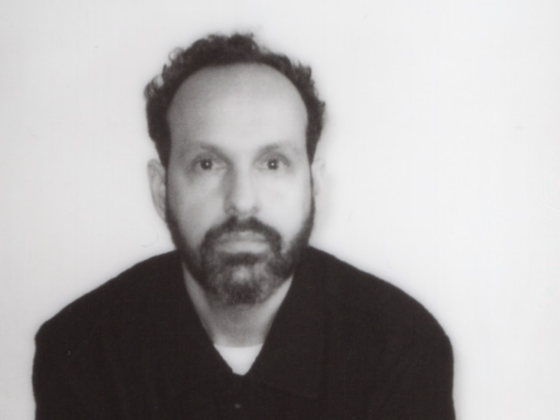
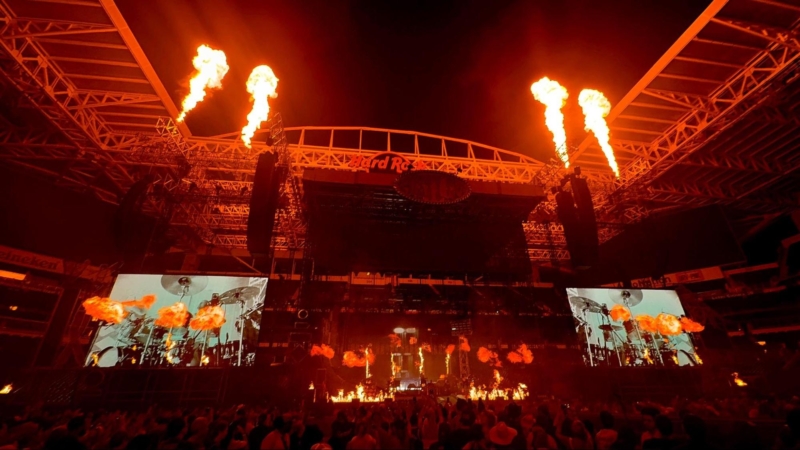
As the live music industry shifts toward fewer, higher-impact shows, John Oot, Chief Marketing Officer of Concert Stuff Group, sees not a slowdown, but a strategic recalibration. In this conversation with Earmilk, Oot unpacks how changing fan expectations, rising production stakes, and the growing influence of digital behavior are reshaping the touring landscape. From redefining “premium” experiences to positioning production as a core business driver, he offers a behind-the-scenes look at how fully integrated infrastructure, intentional design, and operational depth are becoming essential in delivering live events that truly feel worth it.
You've described the current touring cycle as a recalibration rather than a slowdown, what's the biggest misconception leaders have about today's live music market?
The biggest misconception is that a reduction in tour volume signals weakness in the industry. What we're actually witnessing is a market that's maturing and becoming more intentional. Artists, managers, and promoters are being more selective — fewer dates, carefully chosen markets, productions that are designed to make a statement rather than simply fill a calendar.
For a group like CSG, that shift actually validates everything we've built. When the stakes are higher on every show, you need partners who bring depth across every discipline. We're not a single-service vendor — we cover trucking through SET, tour buses through Musical Coaches, staging through G2 Structures and G2 Mobile, barriers and crowd management through Guardian Barrier Services, flooring through FPA, audio, lighting, and video through SES, fabrication through Fabrineering, technical direction and full event production services through 340 Productions and Loud & Clear, video production through 7 Cinematics, and storage and show services through our S3 facility in Las Vegas. In a recalibrated market, that breadth isn't just convenient — it's essential.
Fans are attending fewer shows but expecting more from each one. How is that reshaping your marketing and brand strategy?
It's pushing us to be more intentional about how we tell our story. Historically, companies like ours have let the work speak for itself — and the work has spoken well. We've been part of tours with Luke Combs, Post Malone, Bruce Springsteen, Oasis, Green Day, and many others. But in a market where every show is an event, the behind-the-scenes story has genuine value.
Fans want to know that what they're experiencing has been thought through at every level. When we can show that the stage was engineered by G2 with safety and visual impact in mind, that the crowd flow was designed around Guardian's barrier system, that 7 Cinematics is capturing the night for something that will live beyond the venue — that's a compelling narrative. It elevates the perceived value of the ticket, and it supports the artists and promoters we work with in making that case to their audiences. Our brand strategy is really about helping our clients tell a better story about what they've built.
"Premiumization" gets used a lot, what does it actually mean in terms of the fan experience?
In practical terms, premiumization means every touchpoint a fan encounters — from arrival to exit — has been considered and executed with care. It's not just VIP packages or expensive production, though those matter. It's about removing friction and elevating the details fans feel without consciously noticing.
Take ground protection. FPA and HD Flooring aren't what anyone associates with a premium concert, but when a site is properly protected, load-in is faster, grounds stay intact, and the environment feels polished rather than makeshift. The same logic applies to our Guardian barrier systems, where thoughtful crowd flow lets fans get closer to the stage safely and lifts the energy in the room. And a G2 stage isn't just a platform — it's an engineered environment that shapes how an artist presents and how the audience receives them.
Where premiumization becomes most visible is in production, and that's where Special Event Services leads. SES stays at the front edge of show technology — high-resolution LED video, automated rigging, networked audio, pixel-mapped and kinetic lighting, advanced show-control platforms — because the difference between a good night and an unforgettable one comes down to details most fans never consciously register: a sightline, a cue landing on a downbeat, a video wall that makes the artist feel close from the upper deck. Technology in SES's hands isn't spectacle for its own sake; it's how a moment becomes memorable.
Premiumization, to us, is making the invisible exceptional and the visible unforgettable — so fans walk out feeling the difference without needing to explain why.
With fewer, higher-stakes shows, how has the role of production evolved from execution to a core driver of business value?
Production has always mattered, but its seat at the table has changed. Ten years ago, production decisions were often finalized well into the planning cycle. Today, the best tours are building production considerations into the earliest strategic conversations — because the show itself is the product, and everything around it needs to support that product at the highest level.
What that means for CSG is that our companies are being brought in earlier and asked harder questions. It's not just "how many trucks do we need" — it's "how do we move this production efficiently across 40 markets while keeping costs predictable and the team rested?" It's not just "what stage do we use" — it's "how does this structure serve the visual design, meet the technical rider, and comply with venue requirements across a range of configurations?" Having 340 Productions handling technical direction, SES managing audio, lighting, and video design, and G2 engineering the structure means those conversations happen in one place. That integration is where production becomes a business driver rather than a line item.
How do you communicate the value of behind-the-scenes elements, like logistics and reliability, to audiences who never see them?
To be direct about it — the audience isn't really our audience for that message, and we're comfortable with that. Our clients are production managers, tour managers, artists' management teams, and promoters, and they understand the value of reliability in a language that doesn't require explanation. When SET moves a fleet of 25 trucks across a tour without incident, when Musical Coaches gets an artist and production crew to the next city rested and on schedule, when a G2 stage goes up in the time window promised and comes down just as cleanly — that's the communication. Consistency and reliability are their own credentials.
That said, as more of what we do gets captured and shared — by audiences, artists, 7 Cinematics or by media covering major tours — there's a growing opportunity to let audiences see some of what goes into a production. Not in a way that pulls back the curtain awkwardly, but in a way that deepens appreciation for what live entertainment requires. When fans watch a time-lapse of a massive stage going up in a stadium, or a convoy of trucks rolling into a city, there's something genuinely compelling about that. We're starting to lean into that story more intentionally.
You've said every show is now content, how is digital behavior influencing how tours are designed and marketed?
It's influencing everything, and honestly, it started changing things well before the industry fully acknowledged it. The moment a show begins, it exists in two places simultaneously — in the room and on every phone in the audience. That's not a problem to manage, it's a design parameter.
For our companies, that means production decisions are increasingly made with both experiences in mind. When SES designs a lighting system, it has to work emotionally in the venue and translate on camera. When 7 Cinematics is embedded in a production for a concert film or livestream, the staging and set design need to serve to capture as much as the live audience. The new spaces at SES in Mocksville and our S3 facility in Las Vegas were built in part to support the programming and rehearsal needs of productions that are thinking carefully about how a show is going to look and function before it ever hits the road. The digital dimension of live entertainment isn't coming — it's already the reality, and the productions that account for it from the beginning are the ones that generate the most cultural traction.
In this environment, what separates a good live experience from one that truly feels "worth it" to fans?
Intention, carried through every detail. Fans have become sophisticated consumers of live entertainment. They've seen enough shows, and even if it is their first, they recognize when something has been genuinely designed versus assembled. They feel it in the sound — whether the audio system has been calibrated for the room or just pointed at the crowd. They feel it in the sightlines — whether the stage configuration actually serves the audience or just the production's convenience. They feel it in the small logistical things — whether the barriers are positioned to bring them closer to the experience or just to manage them.
What CSG brings to that equation is a team of companies that are each deeply specialized in their discipline, but that operate collaboratively within a shared culture of accountability. When SES, G2, Guardian, SET, and Musical Coaches are all working the same show, there's a common standard that runs through all of it. No single vendor is cutting corners because it doesn't affect their deliverable. Everyone knows the show is the thing, and everyone is building toward it, and the client is ultimately the audience. That alignment is what produces the kind of experience fans remember.
Concert Stuff Group emphasizes fully integrated production, how does that translate into a competitive advantage when working with top-tier artists?
The simplest way to describe it is fewer gaps and faster decisions. When a tour is sourcing production services from six or seven different vendors, the communication overhead alone is significant. Schedules have to be coordinated across organizations that don't share systems, priorities, or institutional knowledge of the tour. When something changes — and something always changes — every vendor has to be updated, re-quoted, and re-scheduled independently.
Within CSG, that communication overhead is dramatically reduced. A production manager working with us on a tour like Luke Combs or The Avett Brothers has access to trucking, staging, audio, video, lighting, barriers, and bus leasing through a network of companies that already communicate with each other. Problems get solved faster because the people solving them are in the same family. And because our companies have worked together across hundreds of productions, the institutional knowledge transfers. We know how each other works, what each other needs, and how to build a show together that reflects what the artist actually envisioned. That's a competitive advantage that's very difficult to replicate by assembling a group of unrelated vendors.
With your roots going back to 1986, what lessons from CSG's history are most relevant to live touring today?
The most important lesson is that growth has to follow genuine need. CSG didn't set out to become a multi-company group — it evolved that way because the industry kept presenting problems that required solutions. Jim Brammer and Jeff Cranfill started with Southern Lights in Winston-Salem because there was a production need in the market. Each company that followed — SES, SET, G2, Guardian, Musical Coaches, and the others — came into existence because a client needed something that didn't exist or wasn't being done well enough.
That discipline, and the company's ethics, still shape how we think about expansion. We're not adding capabilities for the sake of scale — we're building where we see real gaps that our clients are struggling to fill. The other lesson is about relationships. Jim has been in this industry since 1976. Many of the people we work with today are people he's known for decades, or people who came up under someone he's known for decades. Live entertainment is a small world, and your reputation travels faster than any marketing. Every company in CSG has built its standing the same way — by showing up, doing the work right, and being the kind of partner people want to call back.
Looking ahead, what will define the companies and leaders that win in the next era of live entertainment?
Integration and trust — and the ability to hold both as the industry continues to change. The companies that can genuinely deliver across multiple disciplines, not just claim to, are going to be indispensable as tours become more complex and the margin for error shrinks. But integration without trust is just complexity, and trust without integration is just goodwill. You need both.
For CSG, the next era is about deepening what we've already built. Our S3 facility in Las Vegas is a good example of that — it's not just storage, it's a hub that supports the full lifecycle of a production, from programming and rehearsal through show execution and equipment return. Investments like that reflect a belief that the live entertainment industry is going to keep growing in sophistication, and that the groups positioned to support that growth are the ones who've built real infrastructure, real expertise, and real relationships. Leaders who win in this environment will be the ones who stayed close to the work, invested in their people, and never mistook efficiency for the kind of personal commitment that this industry was founded on.
Connect with CSG: INSTAGRAM