
Whether inspiration stems from dreams or lived experience, an artist’s role is to transmute emotion, memory, and meaning into something audiences can see, hear, and absorb.
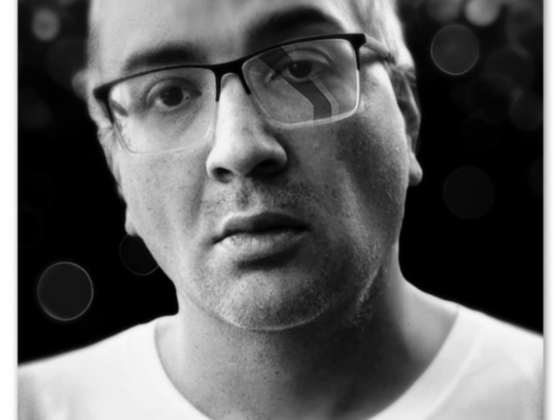
As Frida Kahlo once famously said, “I never painted dreams. I painted my own reality.” It’s a sentiment that rings loudly throughout the work of Zaidoon Nasir, the Aotearoa artist known creatively as WHO SHOT SCOTT.
Before becoming an artist, Nasir’s childhood was shaped by moving between Iraq, Moscow, and New Zealand; experiences that inevitably colored his worldview and later informed his artistry. Though he only spent less than a year in Moscow, growing up in New Zealand as an Iraqi immigrant left a lasting impact on his sense of identity and belonging.
As Nasir explains, “I always felt like I didn't quite belong. My culture at home was quite Arabic, but school was very ‘Kiwi’ coded and Westernized. Especially as a young teenager, it became this thing where I didn't feel Westernized enough in the New Zealand school system generally, but I also didn't feel Arabic enough at home. I was in this limbo, so to speak.”
That sense of displacement made it difficult for him to form connections, often leaving him isolated during his younger years. Yet within that solitude, Nasir found refuge in music and art.
“I spent a lot of time alone, but it was in that solitude that I found my love for music and art. I formed such a strong connection with the arts that I eventually felt a need to start interacting with them myself, and that’s when I started making music. It’s an interesting domino effect now that I look back.”
For Nasir, music quickly became the artistic medium he felt most drawn to exploring. “I think I was about eight years old when I first discovered I could record into my grandma’s old tape recorder she gave me,” he recalls. “It had this record function, and for some reason I just naturally felt inclined to record my voice.”
What began with recording poems slowly evolved into rapping as Nasir became increasingly immersed in hip-hop culture. Armed with an original PlayStation Portable loaded with hip-hop instrumentals, he built his own early recording setup. “I would literally hold the PSP up to the tape recorder, rap over the beat, and record it all as one take. Then I’d rewind the tape and listen back to my songs.”
Hearing himself played back left a lasting impression. “It honestly blew my mind that I could hear myself in that way. It felt like it was an actual record,” he says. Years later, that same excitement still fuels his creative process. “It’s funny because all these years later, I still get that exact same feeling when I finish a song and listen back to it. It’s the same spark my eight-year-old self had.”
Nasir’s debut album HAIRY acts as a reclamation of a period marked by bullying, isolation, and feelings of otherness. Rather than shy away from those experiences, the project confronts them head-on, transforming painful memories into something deeply personal and empowering.
“Turning pain into power has been a constant theme throughout the WHO SHOT SCOTT project,” Nasir explains. “Early on, I guess I was doing it intuitively – telling stories as they happened, but as I’ve realized the level of catharsis and purpose that it gives my art, I’ve started leaning into it with much more intent lately.”
What initially began as immediate emotional expression gradually evolved into revisiting formative years between the ages of 13 and 18. “I was bullied for a lot of things — rapping, my body hair during puberty, being Arabic — and I think that really shaped who I became and how I moved through the world afterward,” he says.
For Nasir, HAIRY became a reclamation of those experiences. “I figured if I’m going to turn pain into power, what better way than to take those vulnerable stories that hurt me and repurpose them into something I consider beautiful?” he reflects. “In an ironic, tongue-in-cheek way, it’s almost like the ultimate revenge.”
With Nasir’s lived experience of feeling unaccepted and channeling that into creativity, an interesting question emerges around how he separates the version of himself who lived through those moments from the version he is today, recounting them on HAIRY.
Connect with WHO SHOT SCOTT: Instagram | TikTok | Facebook | YouTube