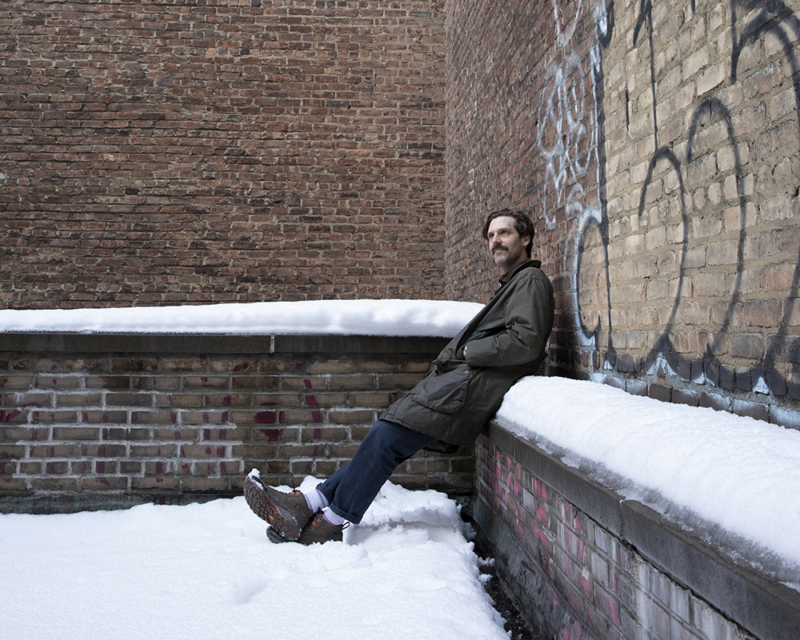
Keith Carne has been doing it all: long-time drummer of the band We Are Scientists, teacher, and frequent touring artist. But in the past few weeks, Carne has added much more to his resume as he prepares to release his own studio album, Magenta Light, available on April 20th. Carne sat down with us to talk about his recent singles and what to expect from the upcoming album.
Your songs that are coming out now are your first fully solo projects?
Yes!
You also mentioned that you’re still working with the band. How are you balancing that?
Any musician will tell you that you have to have the capacity to juggle, hustle, and wear many different hats. It’s really common for a lot of session musicians to also teach and also do touring and recording. None of us are beyond any kind of work. So this is really an extension of that, but it feels much more personal because it’s a thing that’s birthed from love. And almost birthed of necessity, because these songs and this music really have been inside of me for quite some time.
How did you decide that you wanted to make something by yourself?
I grew up in a musical family: my dad is a musician, and my mom is a great music appreciator. They really created the space for me to be musically curious. So, I always played a lot of instruments. And just working with different bands, I always have sort of melodic ideas and concepts and things I’d like to try out, so it was just a natural extension of my musical curiosity. A lot of times, as a drummer, you have a lot of melodic or harmonic ideas, but the instrument isn’t really there for you to express them in a direct way, so it felt very natural for me to do that.
So, you’ll never be just a solo musician?
Working with We Are Scientists, in addition to it being just a great job in itself because the guys in the band are amazing and I love the music we make, it’s also a really valuable opportunity for me to spread and grow my own solo project stuff. I’m actually playing in two bands on this [current We Are Scientists] tour. I’m also working with the support act Sean McVerry, and I can just see how much working with Scientists helped Sean’s career and helped him get in front of audiences that he might not have gotten to otherwise because of the financial logistics of being on tour yourself.
For Scientists, you’re mostly a drummer, right?
That’s correct!
For your own album, are aspects like singing and songwriting things you were already comfortable in or has all of that been more of an experimentation process?
I’ve always played a little bit of guitar, but it’s more just dabbling in my bedroom. When I was in high school, I played guitar and sang in a band, so I’m not completely uninitiated to it, but it’s certainly not the thing that comes most naturally to me. I also teach some keyboard instruments. I had to learn to play the keyboard in college, so the knowledge base is in the back of my mind. I also understand a bit about music theory, just to have conversations with my bandmates about song structure. So, it’s a mix of the familiar and the unfamiliar.
The thing that was the biggest challenge was being the person who made the decisions. As a session musician, you often wind up just wanting to provide options for the people you’re working with. I want them to hear their songs expressed in every way, and potentially even provide ways they didn’t hear it, so I’ll give tons of options. And for myself, I had to do the opposite: I had to start limiting the options.
Have you picked up any new routines while you’ve been trying to get a grasp on your style?
The idea of finding one’s voice is a vexing and tantalizing process. I always think it’s so interesting that a lot of the most iconic singers often don’t have the most aesthetically pleasing voices. Like Bob Dylan doesn’t have a classically beautiful voice, he has a personal voice. That’s something that I’m still actively working on: trying to figure out what one’s voice is. That’s also something I’m familiar with on the drums because I don’t necessarily see the voice as being a literal thing; you’re always just looking to translate some sort of emotion or feeling or notion. It’s just become a little more literal now. It makes you feel a little more vulnerable when it’s something that comes out of you like your singing voice.
To answer your question: I’m playing a lot more guitar, I’m singing a lot more, and I feel way more comfortable doing that, and it feels really good.
Was there a line that you wrote for this album that made you feel like “I’m getting somewhere”?
Completely! I have a single coming out called “Totally Liminal,” and just that idea of “everything out here feels totally liminal” I think is a good encapsulation of how a lot of us are feeling. Whether it’s some sort of practical thing, like how you’re moving through spaces, or if you’re just thinking about what one's identity means in 2026, very few things feel rooted and firm anywhere. This idea of liminal communicates a lot, but then I undercut it by using this word that’s used by skaters and surfers or whatever: to describe something as being “totally liminal.” I like that sort of high-low aspect of it.
That’s something I’m always trying to do: write things that feel perceptive and poetic, but also slightly undercut that with a little bit of normality, so people can relate to it in their day-to-day.
I’ve noticed that recurring theme of space and the moon; Is that something that’s going to come back throughout the album? What does that mean for you?
It’s funny; you write things and then you see the big picture and realize this common theme [like] looking for things, staying hungry, and staying in the hunt. I feel like it’s really important for us to always continue looking. That was a big thing that I wanted to write about.
How would you describe your sound in this album, especially compared to Scientists?
If people know me from something, they probably know me as the drummer in We Are Scientists, and the style that I play for them is a very angular, indie disco, groovy feel. The edges to my music are a lot softer. They’re a lot more ambient influenced. I also take a lot of inspiration from music that’s a little bit more patient. Scientists’ music is really meant to give people energetic bursts, whereas I think the music that I’m writing is meant to be this gauzy, aura-related music. I always find that I’m describing it as “gushing” because I want you to connect to this visceral emotion when listening to it. There are definitely more instrumental passages, and the vocals are a little more sparse; the music takes its time a little bit more.
Can you give us a quick rundown of what’s out so far and what’s coming next for the album?
The first single is called “Look for the Moon,” which is a love song that takes a lot of influence from 90s pop and Manchester 90s music, and mixes that with a gauzy, shoegaze aesthetic. That song has been out for a little over a month. And then a few weeks ago, I released a song called “37 Hours,” which is the most straightforward indie pop, guitar-driven song on the record. That song was inspired by an experience where I remained awake all night and wrote the lyrics for that song in my 37th continuous hour of being awake. That song is about seeing things that are hidden in plain sight, but also not beating yourself up if you need a reminder to look for those things.
I have another single that’s coming out the Friday before the album release. That one’s called “Totally Liminal.” I would say that song is the biggest distillation of the album’s aesthetic into one track. It’s very dance-y; it’s very dreamy. It’s basically inspired by the fact that we’re all sort of constantly streaming in society from one place to another, one hobby to another, one viral food spot to another. I was really looking for a more grounded experience. I also didn’t want to come off like I have all the answers; I’m streaming too.
I have a music video that’s accompanying that. The music video is directed by one of my closest friends, Al Markman, and there are implications that range from the interpersonal to the extraterrestrial, and I’ll just leave it there. The full record comes out the following Monday, and it’s a short record: eight songs. Available Monday, 4/20!
Is there anything you’re hoping for out of this next stretch of your career?
I just really want to share my aesthetic. That’s the biggest and most important goal that I have. When I was in my 20s and 30s, I thought a lot about what success means, and success to me means appreciation from your peers. In terms of shows, I kind of am playing a dream show on Saturday, May 2nd, which is also my 40th birthday. I’m playing an album release show at my favorite small club in the world: Union Pool in Brooklyn. I’m getting some of my closest friends to open that show. It’s a pinch-me moment.
Keith’s full album Magenta Light is available to stream on April 20th. Singles "37 Hours" and "Look for the Moon" are available to stream on all platforms now.
Connect with Keith: Instagram