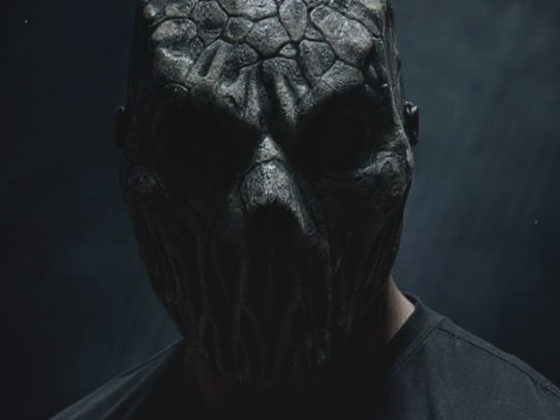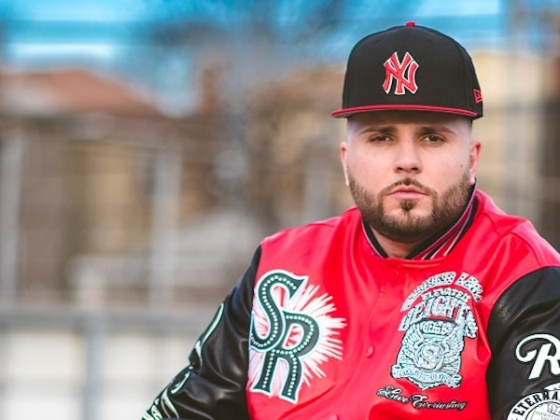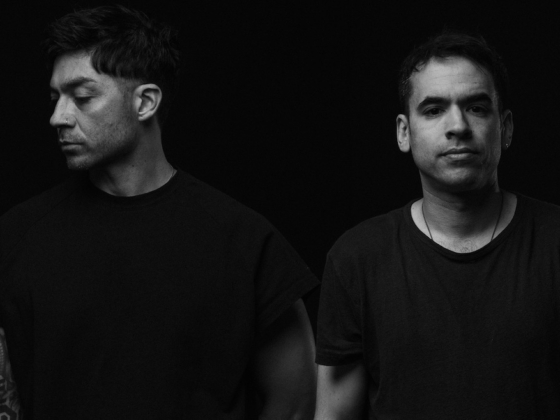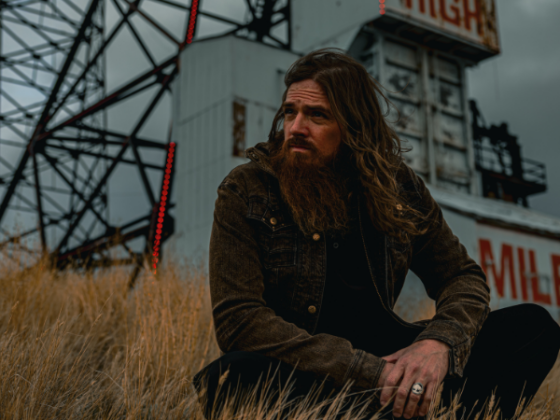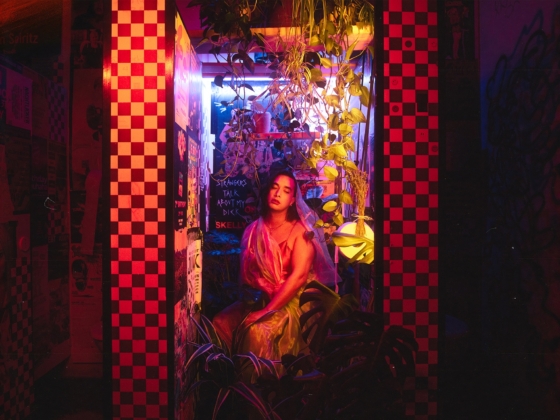
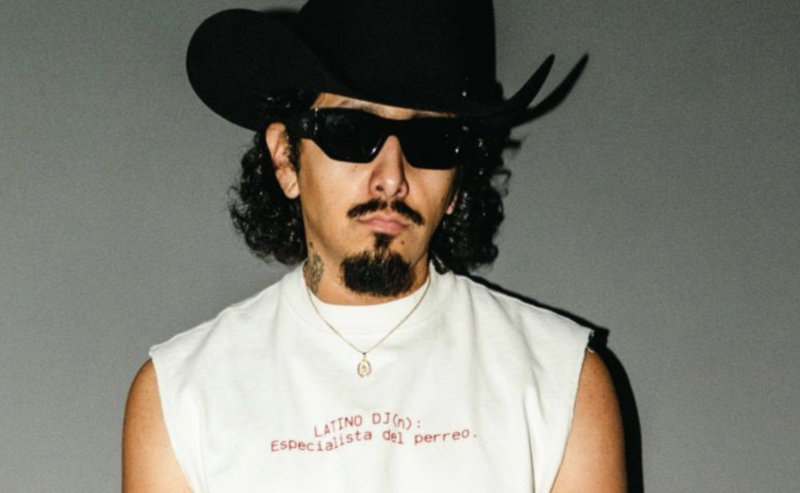
With pOCHO, 8onthebeat steps into a fully realized creative universe that blends LA street culture, Spanglish club energy, and the evolving sound of Latin electronic music. Far beyond a debut project, the 13-track album functions as a cultural statement, bridging corridos, EDM, techno, and emotional dance records into a sound that reflects the lived experience of a new generation of Mexican American artists. Featuring collaborators such as Deorro, Octavio Cuadras, RayBurger, and more, pOCHO positions Ocho at the center of a rapidly expanding movement where Latin identity and electronic music collide in real time.
At its core, pOCHO is rooted in what Ocho calls the “LA pocho sound”, a vibrant fusion of influences that mirrors the complexity of bicultural identity. Through his own words, he describes it as something like a “pozole” or “sancocho,” where different flavors that might not traditionally go together ultimately form something deeply cohesive and unforgettable. That philosophy carries through every layer of the project, from its genre-blurring production to its community-driven rollout, which has already been tested at pop-ups, private parties, and major stages including EDC Mexico and Sueños Festival. It’s a sound built not just for clubs and festivals, but for community spaces where culture is actively lived and shared.
More than anything, pOCHO reflects a personal and generational perspective, one shaped by navigating identity as a first-generation Mexican American, learning to exist between worlds, and ultimately choosing to embrace that in-betweenness as a strength. In the interview with Earmilk, Ocho emphasizes themes of self-expression, mental health, and cultural pride, positioning his music as both a soundtrack and a safe space. As he continues expanding his reach through DJ sets, immersive pop-ups like Privadas con el Ocho, and upcoming projects already in motion, pOCHO marks not just a moment in his career, but the foundation of a larger movement still unfolding.
How would you define the LA pocho sound in your own words?
Culture, it's for sure culture. It's also innovating. And it's also a mixture. I think it's like a ‘Menudo.’
I know gumbo has a bunch of stuff, but I'm trying to keep it Latin. It's like a pozole. It just has so many flavors that you might think don't go together, but at the end of the day, it becomes one of the best things you've ever tried.
So that's how I would describe what pocho in LA means.
I love it. It's like a sancocho!
Exactly. You even have ocho in there, see? Sancocho with pocho. Sancocho with pocho y ocho, you know what I'm saying? I love it so much. That's such a great way to put it.
What does Pocho represent beyond being an album title?
A movement. And like I said before, culture. A lot of people don't realize it, but we're starting to see it now with artists coming up who are bilingual, born here, and have immigrant parents. There are a lot of us. And now that we're older—first generation, at least for me—we're finally able to identify with that.
Before, we didn't know where we fit: You're not from here, you're not from there. You're not American enough, and you're not Mexican enough. So now that we're older, it's become a whole movement of bilingual individuals like myself—being seen, being heard—and we're paving the way for all the new first‑generation kids being born here.
I'm proud to be part of it because a lot of DJs —my peers—felt the same way. Now we can finally be ourselves.
Growing up here in LA, it wasn't cool to be Mexican. Now, even being Latino, we're on top. And when I say "on top," they're accepting us now, embracing our culture more. Because at the end of the day, Latinos always had the sazón. Now they can appreciate it and give us the respect we deserve.
You describe this as a fully realized world. What does that world look and feel like to you?
Honestly, it's just the world I live in. We all have our own worlds—we don't know what someone else is dealing with or experiencing in their own mind.
I grew up with a single mom who had to find her way. She was submissive—the one at home, the one cooking. When my dad left, she had to step up and start working. And even when we didn't have enough, she still found a way to give.
So in my world, I learned to give no matter what. To Lead with love. Always be there for one another. To this day, I feel that way about my music. It represents not just the culture, but who I am.
We all deal with our own struggles—mental health, especially. I'm very big on that. In my world, I just want to make sure everyone is seen and accepted.
Tying it back to the album: Pocho lives in that world. It means it's okay to be who you are. You don't have to fit one label. As long as you find yourself and find happiness in your own world, you'll be good.
So in my world, just be yourself. Just love.
How has your Mexican American identity shaped the direction of this project?
It shaped it to be something special. I've been trying to do this concept since 2020, and now here we are in 2026. Back when I was just a producer—writing, engineering, producing for others—I always wanted to clash both cultures. Last year I became a DJ. Now the Latino DJ is a big thing. It feels new, like when reggaeton first came out. A bunch of us are reinventing old songs—taking something like Caballo Dorado and playing an EDM version in our sets.
If it weren't for my culture and my mom playing those songs, we wouldn't have that nostalgia. Now we're adults re‑experiencing the music we grew up with, but in a new form. That feels new.
So yeah, it shaped my whole life as a producer. Everything led to this moment. It molded me into who I am now.
You worked with artists like Deorro, Octavio Cuadras, and Ray Berger. How did these collaborations come together?
Deorro first. We've had the record "teksi" for about three or four years. We actually previewed it when he headlined EDC, and the reaction was amazing. That's the perk of being a DJ—you can test songs before releasing. He reached out one day just because he liked what I was doing online. Asked if I was down to work. We did a couple of songs for his project. Not sure if they'll release, but the relationship led to "teksi."
Ray Berger also reached out. Back then, I was doing remixes of corridos with trap drums and posting on TikTok. Trap corridos weren't really a thing yet, so people loved the weird, different sounds. Ray saw it and said, "This is dope, let's work." When I started my project, he was one of the first people I called. I said I'm trying to blend Mexican vibes with EDM. He was already great at that. He sent me "Baila Lo," and that's what we did.
Octavio Cuadras—I met him backstage at an Oro show before I was signed to Fono. Then, when I signed, the label reintroduced us. I went to Mexico to record with him. I already had the beat skeleton. Within four or five hours, we wrote "Baila Lo." It was amazing. Beautiful.
What made "teksi" the focus track, especially with Deorro involved?
He's someone I look up to and admire. He's like the godfather of this whole Latin EDM vibe. He just released his own album, and I have a song on it. It played out perfectly.
I think "teksi" is the focus track because it's just a really good song. It represents what we're trying to do: Latin vocals with techno vibes. At the time we made it, that was still fairly new. It's high-energy. Every time I play it in my sets, I get the "ooh-oohs." People love it. We've been teasing it for a while, and people just want the song.
Having someone like him—who's been pioneering for a lot of us—on my album… he's a friend. But if I step back, it's crazy. Like, how am I here? I'm blessed and happy he was willing to release a song with me. He always wants to help everybody, and that's how we align. So it just felt right to make it the focus track.
How do you see "teksi" bridging underground culture and mainstream Latin electronic music?
It's bringing awareness. One thing about dance music is that it's very minimal with vocals. It's beat-driven: bass, kick, and a lead synth. What's cool about "teksi" is you might not understand what the hell the person is saying (that's me and Deorro with an AI voice, by the way), but it just feels good. That's good enough for us to branch out our culture.
Someone from Europe might hear Latin vocals and think, "That's dope." I hear European music, don't understand a word, but it goes hard. And I play those records. So as long as we keep putting our Latin flavor on these records, people will receive it well. When you pour love and effort into a record, people feel it. It's undeniable.
Its frequencies are captured in the studio. I know a song is good when I feel it first. When the DJ and I say, "This feels good," we know it's good because we captured the energy like lightning in a bottle. You can just feel it.
So yeah, it's about the vibes. You don't always have to get it.
Why was it important to host pop-ups in places like taco spots and local venues?
People don't really like clubs like they used to. I host parties called Privadas con el Ocho—rooftops here in LA. There's only a handful of rooftop parties, and we were among the first to mix in Latin EDM. Now it's a regular thing.
People want experiences. They want something that's never been done. FOMO is real. As someone who DJs, produces, promotes, throws parties, raps—I do it all—I've learned that.
So I had to be specific about where I did these pop-ups. It has to make sense with my brand. Villa Tacos is a huge staple—they just did the Super Bowl with Benito. It made sense to collaborate and give back to our culture. My crew goes there once or twice a month. It's part of who we are.
It's cool seeing other DJs doing the same now—pop-ups that give back to the community and bring awareness to local spots. I'm grateful to be in a position to bring joy. I throw these events, go home, sleep, and wake up ready for the next thing. But when people message me saying, "I really needed that—a place to disconnect, to feel community"—that encourages me to keep creating spaces where people feel like they're part of something.
That’s really cool and different! That would actually be really cool to host in Puerto Rico–just going to throw that out there.
The possibilities are endless. People want experiences like that. Off the record, I'm working on a fitness run club for Latinos here in the Valley where I'm from. I just started running—bad knees, but good shoes got me flying like Usain Bolt. So I have to do something with that.
Also, a festival with Latino DJs in San Fernando. And I want to do a DJ set on an ice cream truck, drive around L.A., give out free ice cream to promote the album.
People need experiences right now. Especially in L.A., things are heavy with ICE and everything. It's our duty as creators to give people spaces where they don't feel alone.
How does your live performance differ from the studio version of your music?
I've been producing since 2020, but I just started DJing in 2025. There's nothing better than performing. I get why entertainers fall into depression after retiring—the adrenaline, the crowd cheering, the dopamine. It's amazing. You're controlling people with sound, with frequencies. I know what song will be the highlight of someone's night. That feeling is incredible.
The studio is different. I'm locked in, forgot to eat. You get a dopamine rush when you finish a track—that lightning in a bottle feeling. But if I had to pick, I'd pick live.
Playing live is pressure. Even now, I get this feeling like I'm going to forget how to DJ. But once the first or second song hits and the crowd's energy comes back, it's autopilot. And it feels great.
How do you see Latin electronic music evolving, and where do you fit in?
I see it becoming its own genre. People are going to want to be part of it. A lot of my peers are dropping albums. Last year, people were barely starting to go to raves; now everyone's into it. Rave culture is beautiful—no judgment, you can dance, do whatever you want. PLUR energy.
It's going to be big. My friend Dioro just did a collaboration mixing banda into it. I have unreleased stuff with Banda Zeta. Everybody's going to want a piece of it.
Where do I fit? Just keep creating and adding my culture. That's what got me here and will sustain me. It's fun putting my roots in the music because people relate to it. Why fix it if it's not broken? But we'll elevate it, keep evolving the sound while keeping the roots.
What's next after Pocho? Are you already thinking about the next phase?
The next. Yes, 100 percent. Next month we're going to start working on a new album. I feel like when I came into DJing, I was producing these songs from a producer who was learning how to DJ and how to do things right.
Or just seeing my friends do what they do. Now that I'm fully committed as a DJ, I understand what the crowd needs. I can predict what'll work and what won't. When people send me music, I know if it's good or not. So I'm approaching this new project as a DJ/producer. It's a whole different vibe. I'm excited to work with new people, new sounds, but now with that DJ knowledge.
How do you want fans to experience your world beyond just listening to the music?
I want them to experience it in different ways. I'm starting to be more vulnerable. On the album, "Perdona" is about my past relationship, while "Show Me Your Love" was inspired by my current girlfriend.
I also want people to know who I am on a regular day. Posting health and mental health videos. We're normal people too, but we don't live an ordinary life. Fitness is hard when I'm playing 1–2 AM Friday through Sunday, then readjusting on Monday. The glitz is cool, but it's not worth it if you're not 100% physically.
So yeah, come into my world—Privadas con el Ocho, the music, and a more vulnerable side. Next month I'm doubling down on that. Especially for us Latinos: mental health, therapy. I take it, I see the benefits. Other DJs don't talk about it. Maybe they're not doing it. But I think it's important. That's phase two: the music and being more vulnerable with my community.
So, for the last question, if someone steps into your universe for the first time, what do you want them to feel?
I want them to feel what being yourself feels like. We get lost trying to please other people. I want them to see me—wearing what I want, talking how I want, playing what I want—and think, "Damn, this guy's really himself!"
I want them to feel it's okay to step out of the box. It's okay to be the outcast. Being the outcast is what makes you special. Blend in, and you disappear.
So whether it's through Pocho, a privadas con el ocho party, or my videos, I want them to feel inspired to be unapologetically themselves. Accept your flaws, your culture, and where you come from, and just run with it. That's the energy.
Connect with 8onthebeat: INSTAGRAM