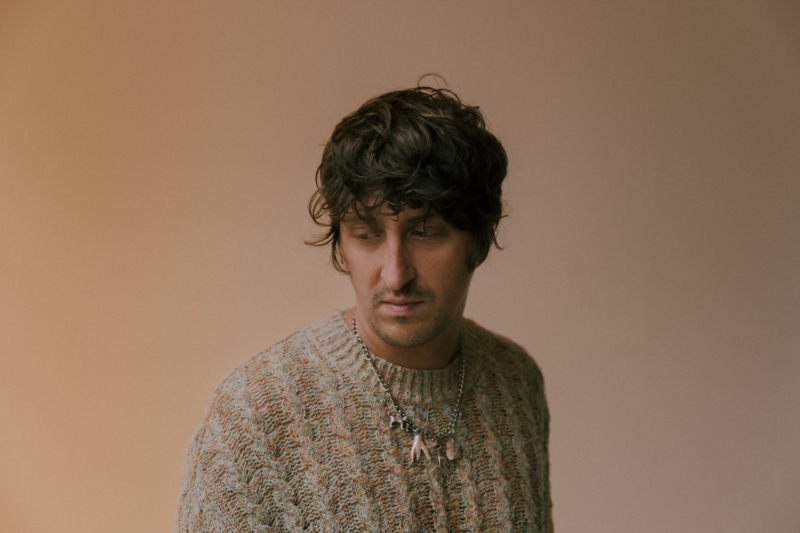
Berlin-based producer Parra for Cuva has spent over a decade navigating the space between organic instrumentation and electronic precision, building a sound that feels equally at home on festival stages and in late-night headphone sessions. With a catalog that stretches from downtempo to organic house, Nico Demuth – the artist behind the project- has carved out a lane that prioritizes texture and emotion over genre boundaries. His 2013 breakout "Wicked Games" may have reached Gold and Platinum certifications across multiple countries, but the albums that followed – Majouré, Darwîś, Paspatou, Juno, and Mimose – revealed an artist more interested in evolution than replication.
On May 15, Parra for Cuva is slated to release Nacar, his sixth studio album and perhaps his most immersive work yet. The campaign opened with lead single "Selva, Selva," a hypnotic blend of traditional Latin vocals from Maria Kaxinawá and self-played percussion, accompanied by a music video filmed during his sold-out 3,000-capacity show at London's Drumsheds. The second single, "Towards Amber," pulled in the opposite direction, introspective, spacious, and built from chopped guitar samples and distant vocal textures. Together, they sketch the album's range: twelve tracks split between solo compositions and collaborations with Nathan Ball, orbit, CRi, PALLADIAN, Aukai, Vines, Vraell, and Cile. Field recordings captured during sessions in Costa Rica thread throughout the record, connecting the electronic production to the physical environments where it was conceived.
Beyond the music, the Nacar project is unique in its intention. The album arrives ahead of a European and North American tour that includes a pioneering balanced ticketing system, where fans who can afford higher-priced tickets subsidize reduced-price options for others. It's a rare gesture in an industry built on maximizing revenue, and it signals something larger about how Parra for Cuva approaches his work: as a shared experience rather than a transaction.
We sat down with him to talk about the creative process behind Nacar, the contrast between its singles, and what it means to build music that balances dancefloor energy with genuine intimacy.
"Selva Selva" opened the campaign with traditional Latin vocals and hypnotic percussion, while "Towards Amber" feels more introspective and spacious. Was this contrast intentional, using the singles to show different sides of Nacar?
Exactly. I felt that Selva Selva represents the album in its full spectrum, while Towards Amber explores a more personal side my own interpretation of downtempo, using those very “Parra for Cuva–ish” vocal samples. In general, each single from Nacar reflects a small cluster of tracks in a similar style, almost like giving a glimpse into different corners of the album.
You've used the "Towards [Color]" naming pattern before, from "Towards Orange" to "Towards Amber." What does this phrase represent for you?
Choosing names has always been very important to me it’s a deeply personal process. Once a track is finished, I go through the notes on my phone that I’ve been collecting over the years and throughout the album process. These can be reflections on moments I’ve experienced, personal emotions, or simply words and combinations that resonate with me.
Towards Orange was written during a time in New Zealand when everything felt light and easy. I had just started making music, and life felt very open. Towards Amber, on the other hand, came after a more challenging personal period when things slowly started to feel good again. That’s why I like connecting these tracks. In a way its me towards a good feelings represented by a color.
The same goes for pieces like Selva Selva and Cupa Cupa but with a different meaning.
You shot two live videos in Costa Rica that will be released with the album in May. How did that environment shape the sound of Nacar? Are there field recordings from Costa Rica on "Towards Amber"?
Unfortunately not, as I had already finished the track before going there. But the trip had a strong influence on newer material I’ve already started working on songs that incorporate field recordings from Costa Rica. The bird sounds in particular were incredible, and even small details, like the resonance of steel cables, really inspired me.
The Nacar Tour introduces a balanced ticketing system where some fans subsidize reduced-price tickets for others. What motivated this experiment?
Touring has become increasingly expensive, bringing a crew, renting venues, production costs it all adds up. Naturally, ticket prices have had to increase as well, especially as the shows have grown with more elaborate stage design and live musicians.
At the same time, I’m very aware that not everyone can easily afford a €40–50 ticket. Students or younger fans often have to work quite hard to make that possible. I also know that there are people who are in a position to pay a bit more and are happy to do so. So the idea was to create a system where those who can contribute a little extra help make the experience accessible to others so everyone has the chance to be part of it.
You write in minimal settings garden huts, rented apartments but now play venues like the Roundhouse. How do you translate music made in solitude into immersive shows for 3,000 people?
I’m still blown away that I’m able to sell 3,000 tickets in a single city. On stage, I try to bring people back into those small, intimate spaces where the music was created. I use an iPad to play soundscapes and sound design elements I’ve recorded sometimes including field recordings.
Because I can trigger and shape these sounds quite freely, almost in a jam-like way, it helps recreate that sense of intimacy and spontaneity, even within a large venue.
"Towards Amber" closes Side B on the vinyl before the album pivots. What role does this track play in the album's arc?
It felt like the perfect way to close the first part of the journey. For me, Side A and B belong together, just as C and D form another chapter. I often like to end these sections with a downtempo piece, and Towards Amber naturally fit that role.
"Selva Selva" features Maria Kaxinawá's vocals prominently, while "Towards Amber" is more instrumentally focused. How do you decide when a track needs a vocal collaborator versus remaining purely production-driven?
Both tracks actually rely heavily on vocals just in very different ways. In Selva Selva, the vocal is front and center, while in Towards Amber, it’s more fragmented and textural.
After trying many different ideas for Towards Amber, I found a West African vocal sample on Tracklib, which became the foundation for those chopped vocal elements.
Not every track needs a full vocal line, but almost all of my music includes some form of vocal texture snippets, effects, or layers. I’m very drawn to that. The real question is whether a track needs a clear vocal line or just vocal fragments. More upbeat tracks often have space for a full vocal, while in downtempo productions where there’s already a lot happening rhythmically vocal chops can act more like an additional groove element.
You filmed the "Selva Selva" video at your sold-out Drumsheds show, capturing that incredible live energy. Is there visual content planned for "Towards Amber," and if so, how does it differ in approach?
Towards Amber carries a very different kind of energy it feels more introspective, something you experience on headphones in a more intimate setting.
I’ve always felt that the first single is the most important one, so we tend to invest more into its visual production. For Towards Amber, I imagine something much more subtle a simple, beautiful visual. Maybe a sundown shot from a moving car, something calm and atmospheric that matches the mood of the track.
Connect with Parra for Cuva: Instagram | Soundcloud | Spotify