
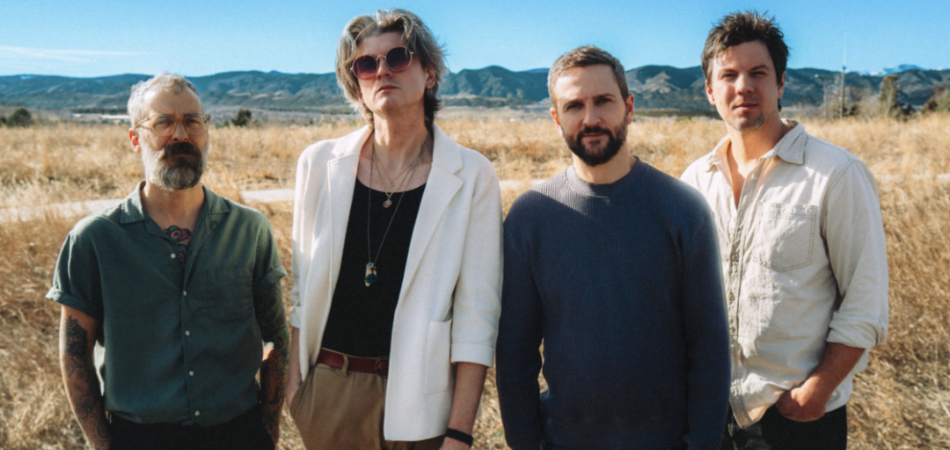


It's official, Chicago alt-rock band The Academy Is… just released their fourth album, Almost There.
Their first full-length album since the release of Fast Times at Barrington High in 2008, Almost There is in many ways an ode to the changes they’ve been through since their early beginnings, and in particular a nod to their first album, Almost Here.
Now a four-piece made up of singer William Beckett, bassist Adam Siska, guitarist Mike Carden, and drummer Andy “The Butcher” Mrotek, The Academy Is… now find themselves far away from the wiry twenty-somethings they made music and toured as before, and have come back to the music business as grown men with vastly different concerns and tastes.
There’s something very comforting and familiar about Almost There, which takes the best of the pop-punk rhythms TAI were known for before, but pared back, the anger and angst turned down, and altogether much slower and more thoughtful. One thing in particular that has changed is the accent William Beckett sings in, which in the past tended to veer towards an inexplicable Transatlantic twang despite his Midwest roots.
The album opens up with the gentle, meandering “Up in the Air,” which feels like a slightly odd choice to open up your first album after an almost two-decade-long break – but maybe it’s exactly the point, and starting with a gentle track instead of bursting awake with something high-energy shows just how much the band has changed since the likes of Santi and Fast Times.
The album then moves into the much more energetic “Miracle,” which feels a lot more like a classic TAI track, with its driving bass and percussion lines and jangly guitar. Beckett’s vocals are as emotional as ever, but with an added depth that truly only comes with maturity.
In the words of the band themselves, “Almost Here was the beginning. Almost There is the reflection. It’s about checking in with who you thought you’d be twenty years later, seeing what changed, what stuck, and what still feels like home…We want to write from where we actually are now, our audience is growing with us. They’re dealing with the same real-life changes, the same celebrations, the same setbacks.”
This very much comes across in tracks like “2005”, which sees Beckett sing “I’m writing songs again/might even bring TAI back from the dead/would you look at that?” as he talks about parts of a life (possibly his) that have changed, while also reminiscing about summers from decades ago. It’s a sweet song, and the obvious introspection definitely feels familiar.
The beginning of the album may lead a listener to believe that it’s all going to be gentle songs about how things always improve as time goes on, but that isn’t actually the case. The more melancholic “Freak Out” ponders the difficulties of nursing a broken heart and needing to leave a situation that makes you feel like you’re drowning. This is something TAI has always done well – anger wrapped up in cutting lyricism and sweet vocals, but it feels different and almost more poignant in a quiet song with stripped-back instrumentals.
Almost There also definitely has a more obvious indie-folk bent than their previous work, especially in the track “100mph”, which features a standard country guitar rhythm and drumwork, mostly showing off the vocals as they sing “but the world keeps turning/you’re still on my mind/and the years keep burning/we’re out of time”. The song takes a lot more of its inspiration from Fast Times at Barrington High instead of either Santi or Almost Here, which both tended more towards loud guitars and half-shouted vocals than any kind of sense of quiet.
This is a feeling shared on track “Lulu Boy”, which features much the same structure but leans a lot more optimistic in tone, and is much more of a straightforward love song than “100mph”, which is definitely more of a downtrodden-feeling sound.
The tracks after the short intermission track “Floating Through Time” are more rhythmically interesting than the ones that come before, with heavier basswork from Siska and more variation, both Mrotek’s drumming and Carden’s guitar melodies. Which isn’t to suggest that any of the album’s tracks are dull, but the first few definitely feel more like a group of musicians trying to get back into the swing of things together before working it out on the later tracks.
The best track on the album is, without a doubt, the nostalgic “Lost Signals,” which is very obviously about the life that the TAI members walked away from after the release of their third album. Beckett sings “we were just kids dreaming big,” as well as “and the lights hit the stage/and the sound takes you away/I just want to taste it/no, I don’t want to wait”.
It’s definitely something that TAI fans felt for a long time after the group went their separate ways – at the height of their fame, The Academy Is… were influential and beloved by a core audience who felt very strongly and deeply about them, and tears were definitely shed around the world when they ended before.
Almost There closes out with the track “Ten Years”, which definitely warms up the further it gets. The lyrics point towards a sense of loss, or at least not quite grasping something, and the instrumentation is definitely nice to listen to, even if it isn’t anything groundbreaking or innovative.
Overall, Almost There is a lovely album to listen to. For long-time fans of The Academy Is… who never snuffed out the candle they held for the band, it feels familiar in a really comforting way, but it doesn’t quite manage the spark of Santi, the energy of Almost Here, or the earnest pop-infused feel of Fast Times at Barrington High. However, that almost feels like it’s the point – as the band said themselves, Almost There is about checking in, seeing what still sticks after twenty years, and only keeping what works or feels true.
Either way, the album feels like catching up with an old friend after a long time – and that’s enough.