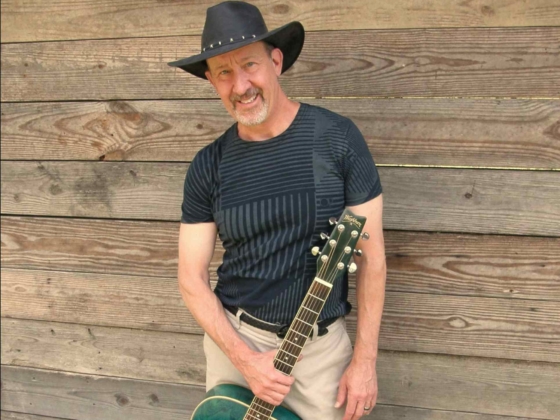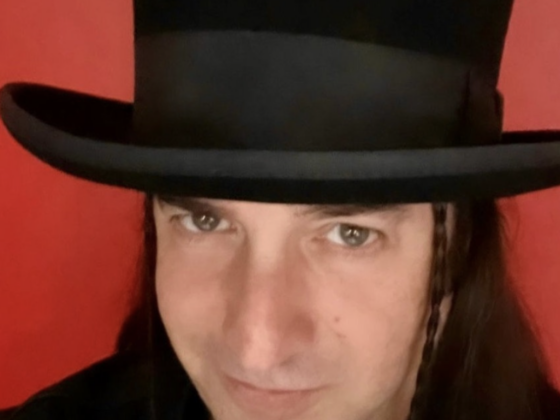

There’s a certain kind of project that only comes together when the noise drops out, when expectations, industry pressure, and the constant forward momentum of “what’s next” finally give way to something quieter, more necessary. For Seattle-based duo Nouveau Arcade, that moment didn’t arrive in a studio session or a label meeting, it started with a simple question between friends: “Do you want to write a song about it?”
What followed wasn’t supposed to be a band, let alone a full-length record. It was an outlet. A way for Len X and K-7, both veterans of nearly two decades on the road alongside acts like Killing Joke, Julien-K, and Avenged Sevenfold, to process, reconnect, and create without an agenda. But in that absence of expectation, something more honest took shape. Songs stacked up. Themes emerged. And before long, Nouveau Arcade became the space where everything they couldn’t say elsewhere finally had room to exist.
Their latest release, DIE HAPPY!, is the clearest expression of that ethos. Built as a concept record around Len X’s experience with depersonalization/derealization disorder (DPDR), the album doesn’t just touch on mental health, it sits inside it. Recorded in part inside a 19th-century church, the project leans into atmosphere as much as narrative, moving through darkwave, industrial, and alt-rock textures with an intentional sense of unease. It’s immersive, disorienting, and deeply human.
But beyond the sonic palette, what makes Nouveau Arcade compelling is their refusal to dilute that experience. The duo operates independently, with full creative control, allowing the music to exist exactly as it was felt, messy edges, distortion, and all. It’s less about delivering answers and more about documenting the process of searching for them.
In conversation with Earmilk, that same energy carries through. The duo chat about friendship, vulnerability, and the strange balance of building something new after already “making it.” What emerges is a portrait of artists redefining success on their own terms, where connection matters more than scale, and honesty outweighs perfection. Nouveau Arcade opens up about the origins of DIE HAPPY!, navigating DPDR through sound, and what it really means to create without answering to anyone else.
You both spent nearly two decades touring with major acts, what pushed you to start Nouveau Arcade as a completely independent project?
[Len]: I was out of music for six or seven years and Kevin hit me up because he was going through some stuff, as musicians do. I asked if he wanted to write a song about it and get that off his chest. That's when we wrote "Summer’s Over" from our first album. We weren't planning on writing a record; we were just doing it cathartically. We both really liked how the song turned out and we enjoyed the process a lot. When we were done, I suggested we do it again. Then we just kept going. Before we knew it, we had our first record done and we were just going to put it online and give it away for free to whoever would listen because this was in the height of the pandemic. We were doing everything over Zoom and just showing up for each other as friends. Writing music because it was something positive instead of focusing on all the other shit that was going on in the world at the time. So that’s how it started and now here we are. We just finished our second record.
[Kevin]: Len and I had always talked about starting a fun synth-driven project, but it really started in a simple way. I was going through a rough time one day and he just said, “you wanna write a song about it?” and I said yeah. That turned into our first song, and after that everything just kind of started pouring out.
Around that same time, a couple fans from one of our past projects reached out and asked what we were up to. I sent them some demos and they suggested we send them to FiXT, which ended up turning into a one album deal.
At the core of it, we just want to create music and share it. That’s really what drives it.
At the same time, it’s exciting to build something around it too. Playing shows, making merch, reaching people outside of just friends and family, that side of it matters to us as well.
Being independent gives us the freedom to do things our way and not feel like we have to follow someone else’s direction. But we’ve also been lucky to work with people who support that. FiXT gave us a lot of freedom and helped us figure out how to run things ourselves, and now we’re working closely with Ninety9Lives on this release, which has been a really good experience.
So we’re in a place now where we still have that freedom, but also the support to grow what we’re building.
What does “not answering to anyone else” actually look like in your creative process?
[Len]: That's a good question, but I think it’s always kind of remained the same. Sometimes you can get distracted and start listening to other people around you, especially when you're in the business and they're your partners. People that work with you mean a lot. The art in and of itself is one thing, but you do listen to people that are close to you and they are part of your team. So when we ended up approaching this record without having a label we had a clean slate. No boundaries. We write what we want and we do what we want. That’s the whole point of being an independent artist. To be honest, it's always been that way. Artistic integrity matters. If we're not proud of it, then why are we doing it?
[Kevin]: I think every musician goes through moments where they ask themselves, “are people gonna like this?” especially when you’re doing something outside of what you’ve already established. And I think that’s valid, it’s hard not to think about that.
But at the same time, you have to be honest with yourself and not get too caught up in that. You have to be willing to be a little vulnerable and just accept that whatever happens, happens.
For us, it gets even trickier because we’re a multi-genre band. We pull from a lot of different influences, metal, synth pop, 90s alternative, disco, and everything in between. So naturally things are going to come out a little all over the place.
At a certain point, we just stopped trying to shape it into what it’s supposed to be and let it be what it is. That’s really what “not answering to anyone else” looks like for us.
What does the title DIE HAPPY! mean to you personally?
[Len]: The record was initially going to be called DPDR, because I wanted to create awareness around the condition that I was experiencing. I didn't really know what I had for quite a while, and the feelings were big. There was a lot of emotion wrapped up around that. But as the record came to fruition and all the songs were done, we were digesting it all. Because Die Happy was the main hook in the first song, "Guns & Candy," that we wrote it just sort of felt right. Die Happy is sort of a double entendre but it really is about living happy. You can’t control the uncontrollables, the suffering, the uncomfortability that comes with this condition. It’s about making it through it and still being happy and experiencing joy the best that you can, regardless of what's happening.
[Kevin]: It’s kind of a contradiction, but it makes sense to me.
To me, it’s about the fact that we only get one life, and there’s no guarantee how it’s going to go. There are so many things we can’t control, where we come from, what happens to us, the good and the bad.
But we can control how we choose to live through it.
So it’s about going through all the chaos and just trying to do our best.
So… yeah, I wanna die happy.
How did living with DPDR shape the emotional core of this album?
[Len]: It didn't really shape it as much as it is just the core of the album. As I just mentioned, DPDR was going to be title. It’s a concept album. A diary of sorts. It's a compilation of short stories about the triggers, the anxiety & stress, that were causing my DPDR at the time. It really is the core of the album rather than just something that just shaped it.
What do you hope listeners who may be experiencing similar symptoms take away from this record?
[Len]: That's heavy. I guess I wanted to create awareness. Everybody experiences stress, anxiety, fear, concern, worry… Everybody's going through something that people around them know nothing about. It’s not about a cure, it’s not like "Oh, here's the solution" This is just me sharing what I’ve gone through. Much like how I would listen to another artist and relate to their music. Music connects with people and resonates because it's about the human experience. When I relate to a song I don't feel so alone and therefore I’m not so afraid. It helps me find the strength to move on one more day. But ultimately, it is up to you as a person to keep going. I didn't realize this when I was going through DPDR, but you are the cure, although it doesn't feel like it when it’s happening.
[Kevin]: This record isn’t only about DPDR. I mean, I don’t experience that myself and I’m in the band too, so there are a lot of different layers to what this album is. People can connect to it in their own way, whether that’s something personal they’re going through or just how the music makes them feel.
That said, one part of it does come from what Len was experiencing. He was trying to understand what was going on and came across DPDR on his own, and something about that clicked for him.
At the same time, he’s not trying to tell people “this is what you’re experiencing” or give answers. He’s just sharing what it felt like for him. If someone hears that and it helps them make sense of something in their own life, even a little bit, that’s a powerful thing.
We’re not trying to define anything for anyone or tell people what to think. It’s more about putting something honest out there and letting people take from it whatever they need.
If it helps even one person feel a little less alone or understand something they’re going through, that’s enough. That’s why we do this.
How did recording in a 19th-century church influence the sonic atmosphere?
[Len]: It was so great. It was a whole unexpected story that added to the album. We ended up recording there because of our engineer and friend Chris. This place was closing down and so we had it available to us pretty much for free so we didn’t feel pressured on time. The vibe of the church actually changed the course of the record to be honest with you. The spiritual reflection that you can hear in some of the songs throughout the record fit naturally with the whole premise of questioning who I was and the existential feelings I was having. When we were in the church, it really brought some of that to life and opened a new creative aspect to the album where we ended up putting all the extra content and the choir pieces. That’s what we called them. You'll notice it at the beginning of "Domino," and at the end of "Sick". You'll hear it throughout the record. Where there's not the lost tapes, which is what we called the journal entries, we put together choir pieces because of natural reverb in the church and the way it felt to sing in there. The environment with the stained glass and all that was just so cool. It really helped make the record cohesive, so it wasn't just a body of songs. That’s how the concept of the album all came together with the lost tapes and the choir pieces. Which is why the Deluxe Edition is meant to be listened to as a whole piece of work. That’s the way it plays on the vinyl and other physical media. You can also download the Deluxe Edition from Bandcamp. Unfortunately, we couldn’t really release it that way on the streaming platforms and have it make sense.
[Kevin]: The album wasn’t recorded in just one place. We tracked across a few different studios, Len’s home setup, then places like Robert Lang Studios, Litho, and Studio X. All of them have their own vibe and history, and as musicians it’s pretty surreal being in rooms where bands like Nirvana, Deftones, Foo Fighters, and Pearl Jam have recorded. That energy is definitely there.
A lot of that was made possible through our engineer, Chris Rahm, who helped get us into those spaces, which we’re really grateful for.
But the church, Studio X, had the biggest impact on the sound of the record. We mainly went in there to track vocals and live drums, and the space itself really influenced what came out of it. Being in that environment is what pushed Len to start creating those choir pieces you hear throughout the album.
From what I remember, he layered a huge number of his own vocal takes to build those, almost like creating a choir out of one voice.
So even though the album came together across a few different places, the church really helped shape the atmosphere in a big way.
Which track best represents the sonic identity of the album, and why?
[Len]: I know Kevin chose "Domino" and there's part of me that wants to choose that song as well. But for me, I would say it’s "Guns & Candy" because it was the first song we wrote and it’s the first song on the album. And because there was a lot of writer’s block going into this album. There were musical beds that we had written, but nothing that had any words because I was trying to write about anything besides DPDR. But I couldn't because that's all I was really experiencing. So, in order to be honest with myself, I had to write about that. When I wrote "Guns & Candy," which has the reference to the black balloons, it triggered the whole idea of having a black balloon for each song. The balloons are representations of all the darkness that hangs over our heads and follows us and triggers our anxieties and stress, which is what ultimately triggers DPDR for me. Writing that song honestly is what gave my experience an identity and opened the door for me to talk about it.
[Kevin]: “Domino” is probably the best example for me.
It opens with a choir piece, which really sets the tone for the atmosphere right away. From there, it moves through a lot of different spaces, electronics mixed with live acoustic drums, softer vocals and spoken moments that build into something heavier and more intense.
What Len is saying in that song also paints a really clear picture of where his head was at during that time. It reminds me of a lot of the conversations we were having while this album was coming together.
It’s a very dynamic track. It can feel erratic at times, then heavy, then almost beautiful, and I think that range of emotion sums up the record pretty well.
But honestly, if you asked me that same question tomorrow, I might give you a different answer.
K-7, your role is described as being present rather than directive, how did that dynamic shape the final result?
[Kevin]: Len and I had taken a bit of a break from music and honestly didn’t know what the next chapter was going to be. You can’t really force inspiration, so there was a period where we were just living life and waiting for something to click.
During that time, Len was going through a lot and kind of isolating himself, so a lot of my role at the beginning was just being there. We were having long conversations over Zoom, just talking through what he was experiencing and where we even wanted to go with music.
When he started putting together demos, those were coming directly from what he was feeling, and I didn’t want to step in and control that or reshape it too early. So a big part of my role was letting that exist as it was first, and then finding ways to build on it.
Once things started taking shape, I’d step in more and help refine ideas or contribute where it made sense. For example, there are moments where he would record a vocal just to sketch out a guitar part, and instead of replacing it, I suggested we keep the vocal and distort it so it becomes its own thing. That idea can be heard all over the record, and there are a lot of little moments like that throughout.
I think that dynamic shaped the record in a big way. It wasn’t about forcing a direction, it was more about supporting him and figuring it out as we went. Then at some point it just clicked, we realized we had something, and it got exciting, and we just kept following that.
After years on major stages, how does success look different for you now?
[Len]: Oh man, it’s totally different. I’m a different person now. I got into music because I wanted to get chicks. And then I started playing music and I fell in love with it and obviously that changed when I was about 14, maybe 16. But all jokes aside, I got back into making music in 2020 because a friend needed help. Then I realized all the healing that it offered me in doing it again, and I was burying that part of me and that part of my identity. And realizing that burying all that was hurting me. So now it’s awesome. I have a new approach to it. I’m doing it for me but it’s also not for me, it’s for all the fans, it’s for everybody else. I realize now that small things can still have a big impact. I don't have to sell a million records to have relevance. And I enjoy it a lot more because I don't feel like I'm trying to be something that I'm not. Nouveau Arcade didn’t play live at all for the first album and we just recently put together a full band and started playing shows again. Playing for 70,000 people at a Seahawks playoff halftime show back in the day was super cool but now it’s just as awesome to be playing in front of a few hundred fans. Maybe we’ll get there again but that’s not what’s driving me.
[Kevin]: I’ve had the chance to play some really fun stages over the years, and I still do in other bands, so I don’t take that for granted. There’s definitely something special about that energy.
With Nouveau Arcade, it’s still early on the live side. We’ve only done a few shows so far in Seattle, but they’ve all had a really great turnout, and I’m excited to build that more this year.
But honestly, success has never really been about the size of the stage for me. It’s more about connection. If something we make actually hits someone in a real way, whether that’s joy, discomfort, or anything in between, that’s what makes it worth it for me
The bigger moments are great, and always exciting, but they come and go. The connection people have with the music is the part that actually sticks.
The album “sits in uncomfortable places on purpose”, can you expand on this?
[Len]: Obviously with the lyrical content and talking about DPDR, this is the most vulnerable I’ve ever been on an album. Being a compilation of short stories about my life it’s as real as it gets. When I’m talking about going to the doctor on "Domino" or I’m talking about quitting drinking on "Push," it’s all very real and personal and that’s not the most comfortable thing to write about. It’s very heavy. Like I’d rather not talk about that stuff. But in order for the art to have relevance, it needed to be discussed. The audio on the album reflects that. We put high compression and a low-dose distortion on every single vocal because my life through that period felt distorted. Life with DPDR doesn’t feel real, it feels distorted, so that's reflected in all the vocals. We also didn’t really use any auto-tune on the record. The mistakes are there for vulnerably and on purpose because it just meshed well with what we're trying to say to get the point across as a piece of art.
[Kevin]: A lot of that comes from trying to reflect what Len was experiencing with DPDR. There’s a constant sense of disconnection, like things aren’t fully real or settled, and we didn’t want to smooth that out.
My role in that was helping len figure out how we can translate those feelings into sound. The tones, the layers, the distortion, even the imperfections, everything was pushed in a direction that feels a little off or slightly out of focus on purpose.
We also had conversations early on about wanting the music to feel a little dangerous. Not in an aggressive way, but in the sense that we weren’t afraid to take chances, even if it meant people who expected something else might be caught off guard. There are guitars, live drums, screaming, and a more raw approach to the production.
From the beginning, we’ve always seen this band as something that can move between genres, and we didn’t want to limit what was naturally coming out just to fit into a specific lane.
At the same time, with so much music now feeling overly polished or even AI generated, we wanted this to feel human. Not perfect, but real. Something you can actually feel the edges of.
That discomfort is part of the point. It’s not there to push people away, it’s there to pull them into a space that feels more real.
Is there a narrative arc listeners should follow, or is it more experiential?
[Len]: I think it’s both. When you listen to the lost tapes, they are many weeks, months and years apart, so there is literally a narrative throughout. Most of the demos were written in a short period of time and then it was putting it all together where the experience made sense and the story of the album started to really unfold. Then in the last lost tape, you’ll notice it’s not final. I say, “I’m noticing that it comes in windows and waves”, which is what it does. But then as my nervous system kind of started calming down and getting back to my baseline, I started having days or weeks of feeling clear. Then with that clarity, I realized that this was curable and that it wasn't permanent. I feel like the songs do all stand on their own but it’s really intended to sit and listen to it all the way through.
[Kevin]: It’s more experiential, but there is a story underneath it.
We built the album to be listened to front to back, with intros, transitions, choir pieces, and “lost tapes” placed throughout to create one continuous experience. It was really designed to be listed to on vinyl, cassette, or CD, where you just press play and let it unfold without interruption.
We know that asks more of the listener, but that’s how we intended it to be experienced. That full version is also available digitally as the Deluxe edition, so people can hear it the way it was originally put together.
Even while we were making it, there wasn’t a clear answer or ending. A lot of it was us figuring things out in real time, following where the feeling went rather than trying to force a resolution.
I think that’s something people can relate to. Most of us are moving through things without everything making perfect sense or having answers.
So there is a story there, but it’s not something you need to follow step by step. It’s something you move through and feel as it unfolds.
What’s next for Nouveau Arcade?
[Len]: There’s a lot. We’ll be on the State of Synth podcast live on May 19 at 9 pm EST. Then we’ll be playing a lot of shows to support the record, doing what we can to get this album out there, and hopefully creating some awareness around DPDR. I think we’re going to try to release some expansion packs around the record. I’m taking certain songs and remixing them into specific genres. So like an EDM expansion pack EP and the like. We’ve got some songs that didn’t end up on the album that are good. They just didn’t specifically fit the concept. So maybe some singles too. We’re talking about a few different things. There will be definitely more music coming out while we’re playing shows and looking at touring a bit. We’re hoping to get some stuff out in the next few months. And then probably in the winter I'll write another album.
[Kevin]: We’re expanding the world around the album.
There’s more visual content, alternate versions of songs, and different ways of experiencing the record beyond just streaming it.
Nouveau Arcade has always been just the two of us in the studio, but we’ve built out a live band and we’re really focused on getting this in front of people.
We’re looking for more opportunities to perform live and explore this next chapter, while continuing to write and evolve into whatever comes next.
Connect with Nouveau Arcade: INSTAGRAM