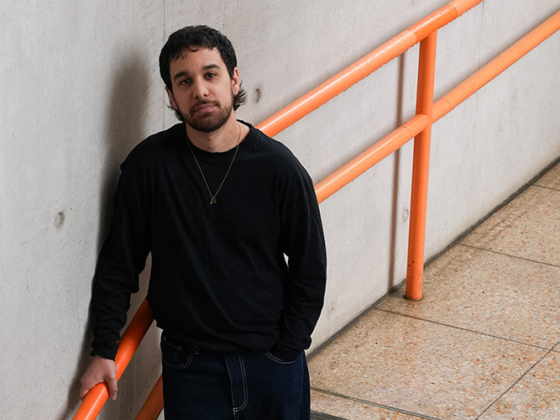

With a voice that cuts straight to the nerve, Los Angeles-based independent breakthrough artist Matt Hansen is redefining what emotionally transparent pop can sound like.
With the new release of his debut album Orchid, a 17-track project that lays it all out on the table, from heartbreak and lost love to the lessons carried into his next chapter, Hansen continues to reframe vulnerability not as weakness, but as a powerful jumping-off point for strength and connection.
Diving into his world, Hansen starts by reflecting on how both his upbringing in Berkeley, California, and his current life in Los Angeles have shaped his artistry:
“Growing up in Berkeley shaped the way I think about honesty in music. It’s a place where people really value expression and individuality, so I never felt like I had to hide what I was feeling or try to fit into something specific. That mindset stuck with me. Being in LA now has pushed me to refine that and take it more seriously, but at the core, I still approach songwriting the same way I did back then. I just try to tell the truth as simply as I can and let the feeling lead everything.”
If you’ve listened to any song by Hansen, it’s evident that the artist has no problem showing up authentically, especially with a voice so palpably expressive it demands your attention with every belt.
With how emotionally charged yet controlled his vocals are, it’s natural to wonder if Hansen could always sing like that or if his vocal style evolved through training and experience.
Hansen says, “A lot of it was instinctive in the beginning. I didn’t really know what I was doing technically. I just sang in a way that felt honest.” Hansen goes on to say, “Over time, I’ve learned how to control it more, but I try not to lose that rawness. Keeping the vocal front and center has always been intentional. The voice is kind of the core of everything I do, so we try not to overcomplicate what’s around it. If the emotion is there, you don’t really need much else.”
Hansen’s vocal sound is reminiscent of the raw, gravelly intensity found in Daughtry frontman Chris Daughtry, who rose to mainstream prominence in the mid-to-late 2000s, while still carving out a sound that is distinctly his own.
When asked about key influences and musical eras that have shaped him, Hansen explains: “I’ve always been drawn to early 2000s singer-songwriter music and even some of the stuff before that. There’s something timeless about artists who can carry a whole song with just a voice and a story. People like Damien Rice and Jeff Buckley have had a big impact on me, and even some of the older Coldplay records. It’s less about a specific sound and more about the emotional honesty in those records. That’s always been what I connect to the most.”
Hansen’s emphasis on emotional honesty makes it clear that this was the exact foundation he was aiming to build with Orchid.
“To me, an orchid is something really beautiful but also really fragile. It needs the right environment to survive and grow. That felt like a perfect way to describe the kind of love and growth I was writing about. Something that can be really meaningful, but also something you have to take care of or it won’t last,” Hansen says.
Hansen sheds further light on the creative process behind the album and the careful approach he took while crafting it, sharing that “Orchid was a lot more intentional than anything I’ve done before. I went into it wanting it to feel like a full story instead of just a group of songs. I pushed myself to be more specific in the lyrics and not hide behind anything. That was probably the biggest shift. Melodically, I leaned more into space and restraint, letting things breathe instead of always trying to build everything up.”
Across Orchid, there are recurring themes of healing through love, relational conflict, and the strain of holding onto something that’s slipping away, alongside a broader lyrical throughline of coming to terms with lessons learned through relationships.
Hansen explains the emotional truth he was ultimately trying to confront on the record: “I think the core of it is accepting that love can change you even if it doesn’t last forever. There’s this idea that something can break you and still be one of the most important things that ever happened to you. I was trying to understand how something can hurt that much and still feel worth it in the end.”
When asked if Orchid were a specific place, what kind of environment it would be, and what it would feel like to exist in it, Hansen confirms that “It would feel quiet and a little empty, but not in a bad way. Somewhere with a lot of natural light where you’re kind of forced to sit with your thoughts. It’s a place where you go to understand what just happened and who you are after it.”
Looking back on his journey as an artist from when he first started releasing music, it’s clear that there’s been a natural progression and evolution of his sound, yet a throughline of vulnerability and authenticity.
Hansen reflects on his own evolution as an artist, saying, “I trust myself a lot more now. Early on, I was second-guessing everything and wondering if something was too simple or too honest. Now I realize that’s actually the whole point. The more honest and stripped back something is, the more it connects. That shift has probably changed everything for me.”
While the record offers a lot for the listener to sink their teeth into, Hansen says, “I hope it makes them feel understood. Even if their story is different, I hope they hear something that feels familiar or reminds them they’re not the only one going through it. If someone can sit with the record and feel a little less alone, that’s all I really want.”
Connect with Matt Hansen: TikTok | Instagram | Facebook | YouTube