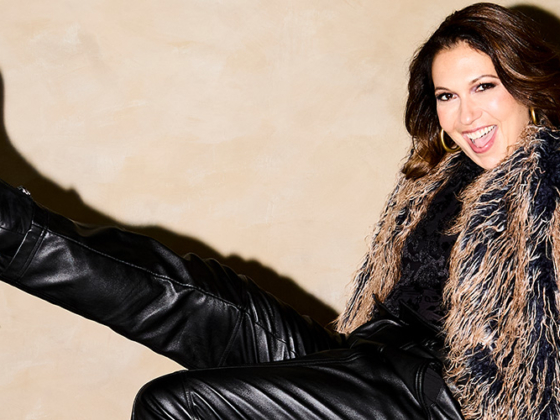
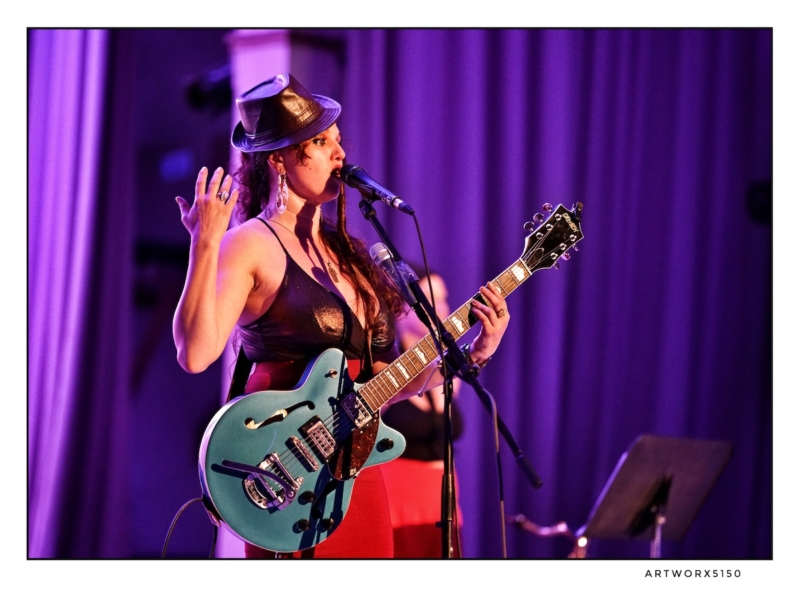
There are artists who write songs about places, and then there are artists who let places write through them. On Live In Berlin, Vol. 1, Sariyah Idan stands firmly in the latter camp, capturing a body of work shaped by streets, cities, and the quiet spaces between cultures. Recorded fully solo, in one take, with no edits or safety net, the album feels less like a performance document and more like a transmission, a living archive of breath, memory, and intention.
From the idealistic hush of Woodstock to the technical precision of Berlin and the raw emotional permission of New Orleans, her music moves fluidly across geographies and genres: jazz brushing against folk, hip-hop rhythms bleeding into Latin and Caribbean textures, all threaded through Jewish musical traditions and a fiercely embodied sense of storytelling. Busked, breathed, and built in real time, these songs carry the fingerprints of ancestors, street corners, and late-night revelations.
We caught up with Sariyah to talk about how environment shapes narrative, why vulnerability without polish felt essential, and how honoring influence can become a form of cultural activism, all while tracing the emotional arc of a project that feels as intimate as a love letter and as expansive as the cities that inspired it.
You’ve lived and created music in very different places, from Woodstock to Berlin to New Orleans. How have these environments shaped not just your sound, but the way you approach storytelling?
I think my storytelling approach is most influenced by the ways a particular place makes me feel, the experiences I have there. By the sounds in that place, the ways people interact in public space. By the philosophies and ethos of that place. With this I’m mainly thinking of Woodstock. I haven’t lived in the Mid-Hudson Valley since I was a teenager, though I go back to visit my mom, but the idealism of that place definitely influenced the way I look at the world and personal relationships which no doubt affects my lyricism. Berlin has really affected my sound more so than my storytelling, I think. And New Orleans has given me a sense of permission to be extremely honest, along with bigger brass sections on my studio recordings. But a lot of it is really about sound. There are field recordings from both New Orleans and Los Angeles on the Glitter & Blood album. And from Granada, Spain on Breaking Shadows where I wrote a few songs. I like to sample reality as part of both my sound and storytelling.
I should add that I lived in California for a long time, and also for spells in New York City where my family is from before moving upstate. Los Angeles is where I wrote most of my Breaking Shadows album. The expansive sky, glittery lights, and pacific ocean feature in the lyrics of “Sweet Alibis” on the Glitter & Blood album and now on Live In Berlin, Vol 1. Los Angeles also gave me a bit more of a cinematic approach to storytelling, not just because of Hollywood, but because it’s a picturesque place. New York is where I allowed so many different cultures to permeate my spongy teenage self. I think they left huge fingerprints on how I feel and compose music.
Your music blends jazz, folk, hip-hop, Latinx and Caribbean influences alongside your Jewish roots. How do you decide when to consciously honor a tradition versus letting influences emerge intuitively?
It’s a fairly intuitive thing for me. It comes from a place of feeling in my body, in my vocal timbre and flourishes. I was a professional dancer growing up, both contemporary and world folk traditions. For a while I danced flamenco which is probably what influenced me to focus on playing a nylon string guitar, all my finger tapping on the body, and also the specific foot mechanics of the foot percussion I do when performing live. But in the creative process I often feel a rhythm or melody in my body first. Once it’s defined I’ll examine what cultural influences are embedded in it. Sometimes I will then accentuate them. I very rarely approach it as an act of intentional cultural collage. Although sometimes. For example on my song “Why You Do” from my EP Deeper Than Skin — it’s also on Vol 2 of Live In Berlin— the weight of the message about injustice felt easiest to deliver with a roots reggae feel. I’d been working with a dub reggae band out of Vienna at the time called Dubblestandart who I met through a roots DJ who I was a crate carrier for when I was a teenager. Any way, that vibe was around me a lot at the time. Later in that song when I felt urgency to push out a whole lot of thoughts, I launch into a spoken word kind of rap section. But when it came to the hornline I leaned into Jewish traditions, in part because of the topics. I wrote the hornline inspired by the Ashkenazi melody sung to signal the end of a sentence when reciting Torah. The very layered message there is a desire to end a specific chapter of injustice. When I sing that hornline when playing solo I use the syllable “ni ni ni” which comes from the Ashkenazi Jewish mystical music form called the nigun. I actually “ni ni ni” all over the place in my music, and on interpretations of songs. It’s me doing my Jew jazz scat thing if you will..… But, in short, my blending of form is generally a pretty intuitive and organic thing.
You’ve described honoring ancestors and influences as a form of cultural activism. What does that look like in practice when you’re writing or performing?
This may sound really esoteric, but it has to do with intentionality and trusting intention to create energetic ripples, both on society and also on how I write and perform. I intend to honor and respect the people whose shoulders I stand on, both my biological ancestors and my creative ancestors. I believe it is important to honor as opposed to steal, and that this has a healing impact on society. To speak less esoterically, I am a woman with white skin privilege in the USA who has been greatly influenced by the Black American music cannon. I’ve had many prominent teachers from the Black American Music community who have told me they also hear my ancestors in my voice and music. By honoring my ancestors I also honor my teachers. If we all honored both our ancestors and our influences I believe it would raise the vibration of harmony on the planet, and harmony is a vibration I believe we really need.
You’re known on Royal Street as “the most hauntingly beautiful voice of the New Orleans streets.” What has busking taught you that formal venues never could?
Oh my gosh, so many things! That music shifts people’s experience pretty instantaneously, especially when amplified in public space. That many people appreciate the music without ever saying anything. That other people are just miserable haters and there is little I or anyone can do about that. That children are so quickly captivated by performers, that their curiosity and joy is infectious. That allowing the sonics of the environment to breathe and affect me— from birds and breeze to sirens and loud party buses— adds a potency to my performances. The street has taught me about stamina, about how sound bounces off architecture and gets swallowed by the river. It’s also allowed me to witness in real time how my music in particular affects people, and people from all different walks of life. I’m a nerd who wants to put in my 10,000 hours to really understand what it is that I do. Playing on the street gives me the opportunity to stack up a bunch of those hours.
You’ve said songs are like letters, and this album is a love letter to both Berlin and New Orleans. What did you want each city to recognize about itself in this project?
This is a deep one. I guess I hadn’t really thought about these songs as being mirrors for each city, more so that they are letters of my deep gratitude. Without the unabashed support and enthusiasm I’ve received from New Orleans, along with the technical prowess and deep listening ears of Berlin, I would not be the artist that I am.…….. Well, maybe I just found the mirrors and answered your question. But I would add, particularly with Vol 1, there are songs that touch on elements of histories of both cities. I wanted to nod at those histories, lend my voice to them, to push the needle on them. I think this is part of my sense of storytelling, and also of honoring legacy. You know my grandmother was very much a historian. I often root in historical context because of her. But as an artist I aim to push the narrative along, either through lyrics, through coupling other songs on the same stage, or through energetic interpretation.
Why did recording live, fully solo, one-take, no safety net, feel essential for this album?
I really wanted to give my solo live sound to people on a recording. I love studio recording. With both my Glitter & Blood album —and even more so with my Breaking Shadows album— I tinkered with the demos in my home lab playing almost all the instruments myself, working the songs out in different keys to find the right melodic arc for the album. Once I felt solid about my arrangements I locked in other musicians and went into professional studios. Those albums reflect my craftsmanship as a songwriter, composer, producer. For Live In Berlin I wanted to offer my manner as a performer on record, both because I take pride in my work as a performer, and also because it is the primary way that I currently perform, tour, and that people first encounter my music. I wanted audiences who appreciate my live performances to be able to hang out with that sound on their own time, and in their private spaces.
What does vulnerability mean to you as a performer, and how did that vulnerability show up differently on this album compared to your studio work?
Ooohhh, this is a layered one. For me vulnerability is the willingness to show feeling, to bare the sensitive under-skin of experience. In performance that vulnerability is mixed with the reality of needing to not totally fall apart. It’s a combination of sensitivity and control. And it’s also coupled with allowing myself to feel the pulse and emotionality of the audience. Performing can be a messy kind of vulnerability.
In the studio there is more of a container to open up to a vulnerable state. You can take a tea break if the voice needs, or adjust the light to shift the mood. In the studio I often know we’ve laid down the right take when I cry after performing it. I’ve been known to cry during the right take while producing sessions where we’re overdubbing strings or horns. But it’s really challenging to cry while singing, playing guitar, dancing drums, and still keep the show going for the countless pairs of eyes and ears, although I had a couple moments of getting close to tears while recording Live In Berlin. I think you can hear those moments of tension just before the almost mess, and they can be moving or repelling depending. With the studio, you have more control to polish the mess. I think the longer the industry standard is to use computers to record instead of analog methods, the more polish seems common and audiences get used to a more polished sound. So, in this moment I simply feel super vulnerable about putting out a project with minimal polish, minimal tinkering to fix little things from timing to pitchy parts and chord mistakes. There are little moments of this record that if we’d been in the studio I’d tell my engineer “I can do that part better, punch me in”. But with this, it’s just the bare authentic reality of a concert. That in and of itself is vulnerable, and it’s a new kind of bold vulnerability for me.
You come from a theater background and describe each set as a crafted arc. How do you think about pacing emotion across a live set?
I think of it in a variety of ways. First I think of where we start and end with the first and last songs. Then I think of how much weight or levity is in the lyrics of songs that are next to each other, how they lead into each other. I think of tempo, of keys. As with many things, I consider the map and then kind of let things fall into place how feels right. I’ll look back later and experience the arc myself if that makes sense. To come back to one of your earlier questions, one of the things the street gives me is space to experiment with how the meaning of some songs change when you place them next to other songs. I still experiment with that almost every night I play out there. But in crafting a set I think a lot about how songs speak next to each other, and what I intend to say through the song order.
The interludes and audience banter are part of the experience, what role does conversation play in your performances?
Yeah conversation is definitely a choice, and it’s something I think I do more since moving to New Orleans, it’s a conversational city for sure. But the banter is many things; a vibe check, a deeper invitation into the material, a way to let the audience know that I am also just a human having human experiences. Sometimes I feel I talk too much, and I don’t banter as much when playing on the street unless people hang out for a bunch of songs which definitely happens more than you may imagine. My banter honestly changes a lot from city to city based on the vibe in that place.
Volume 1 revolves around love, hope, and melancholy, with references to Leonard Cohen and Billie Holiday. What draws you to love stories that exist alongside tragedy?
Well, my first answer is that as an Ashkenazi Jew I am very predisposed to melancholy. It’s part of my ancestral legacy. I think it’s important to note that a lot of the jazz that Billie sang was written by Ashkenazi Jews who were recent immigrants from places like Ukraine. They had roots in klezmer music. Both the emotional and sonic nature of that music leans on moving the needle on melancholy through melodic structure. And Leonard Cohen is the quintessential melancholic Jewish bard. I’ve heard from multiple sources that Leonard was inspired to write “Dance Me To The End of Love” by stories of Jews being marched into gas chambers to the music of string quartets. Recording that song in Berlin was very layered, although it wasn’t until I got back to New Orleans and was thinking deeply about the state of the world, of Gaza, the state of Jews, that listening back to the recording made me cry. You know, the tears are both about vulnerability and also about realization and catharsis.
But all this explanation is also a way for me to personally evade your question. The truth is, I’ve experienced a good amount of tragedy in my own life, both due to circumstances beyond my control and also resulting from my own choices. My own songwriting and also my interpretations of others’ songs are avenues for me to transform those tragedies into something of value, of catharsis. Of healing, both for myself and for my audiences.
Volume 2 focuses on light, both internal and societal, while still addressing darkness. How do you personally hold space for both without collapsing into despair?
I grow vegetables. I meditate. I dance and sing every morning to move the despair out of my body. I watch my cat do silly shit. Cats are so helpful for playfulness. I take time to laugh with friends. I try to focus on seeing simple little beautiful things, like the designs of leaf shadows from a tall tree swaying on the surface of a brick building in the French Quarter while I set up to busk. Or the wonder in a child’s eyes while I play. There is so much beauty in this world even with all its pain. Thats why I fused Sticky Fingaz parody “Unwonderful World” in the middle of my arrangement of the classic, and also why I bring it back around to the optimism of the first verse that everyone knows Louis Armstrong singing.
This album feels like a culmination of years of solo performance. How do you imagine it influencing your future studio or band projects?
I am so eager to find out myself. It might make me more fearless to experiment in ways that I haven’t yet. But right now I’m mainly just focused on learning how these recordings impact people, on touring with this solo live set up, and on playing more regular band concerts in New Orleans to get my local band really tight.
When listeners finish Live In Berlin, what do you hope they carry with them into their own lives or conversations with strangers?
I hope listeners carry a sense of permission to feel deeply whatever they are feeling; about their own lives, about the state of the world. That they have deeper capacity to respect and honor what other people are feeling and experiencing. I hope they carry a strength and willingness to be vulnerable in conversations with each other, to honestly talk about “Whats Going On” as Marvin Gaye says. And maybe even to have conversations about what they dream could be going on that would bring more beauty and wonder into their lives and the lives of people around them.
Connect with Sariyah Idan: INSTAGRAM