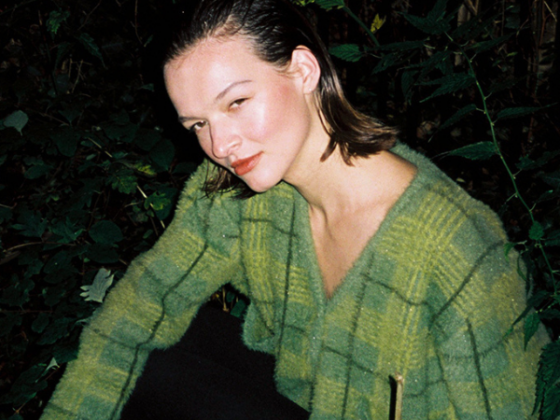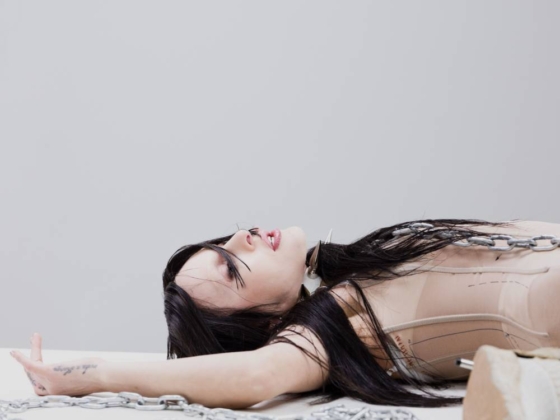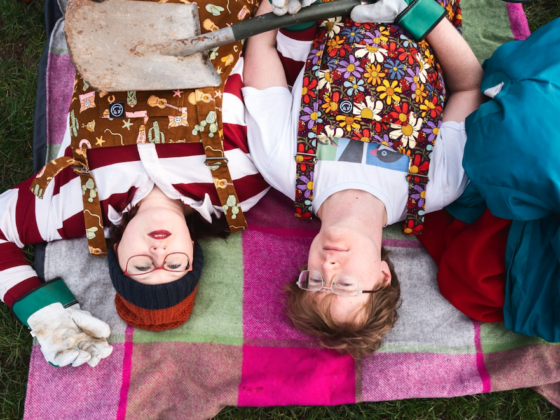


Dutch singer-songwriter Pitou returns with P2, her second full-length album arriving March 20, 2026. Following 2023's critically acclaimed Big Tear, the Amsterdam-born artist has created something that feels both evolutionary and revolutionary. It could be a complete expansion of her Folk Noir sound that's drawn comparisons to Vashti Bunyan, Joanna Newsom, and Laura Marling.
"I discovered a completely new side of my songwriting," Pitou explains. "My previous album, Big Tear, was like a cathedral I built—a place where I could search for answers and give my sadness a home. But I see music as a significant character in my life, and it no longer felt fair to only turn to her with questions or melancholy. It was time to make her role in my life complete, to share all other aspects of life with her too: other emotions, other sounds."
The album emerged from a turbulent period where Pitou found herself "frozen at the crossroads" with every path suddenly open. She chose to surrender to that openness, declaring 2024 her "Year of Experiment and Collaboration." This freedom to explore and permission to fail fundamentally shaped P2's sonic landscape.
Self-produced by Pitou with additional production from Antwerp-based artist Youniss Ahamad, the album balances playful experimentation with traditional approaches. Her close-knit live band, M. Alberto (saxophone/clarinet), Lieke Heusinkveld (keys/clarinet), Jasja Offermans (bass), and Mischa Porte (drums), brings the record to life alongside guest musicians, with mixing by Matthijs Kievit.
The opening track immediately establishes this expanded universe through hypnotic repetition, both lyrically and sonically. The loop breaks as Pitou's vocals unfold to create unexpected paths, electronic sounds combining with indie elements to forge genuinely interesting territory.
"Fish" showcases her remarkable vocal control on one of the album's saddest moments. Pitou sings from the viewpoint of the ultimate procrastinator, someone afraid of going all in. The song opens with a bassline while her voice seems to navigate inner emotions.
"To Do What" ventures into experimental indie territory with long notes and harmonies creating safe space for listeners, even as Pitou sings about feeling undone: “And oh my god, I’m feeling so undone / Now that you are / You are, it was, and then we were / I don’t know what to do”. As the track unfolds, it nearly reaches wild dance beat territory. If this were a film, it would certainly be a surrealistic cult classic.
Choral opening and harmonies on "Jewelry" create a break between acts, allowing listeners to admire the instrumental production and vocal arrangements. The addition of bird sounds at the track's end adds another creative flourish to an already richly textured album.
The album takes a more esoteric turn with slow ballads like "Empty Hand," where Pitou follows piano notes and expresses herself through beautiful melodies and vocals that showcase her classical training and contemporary instincts working in harmony.
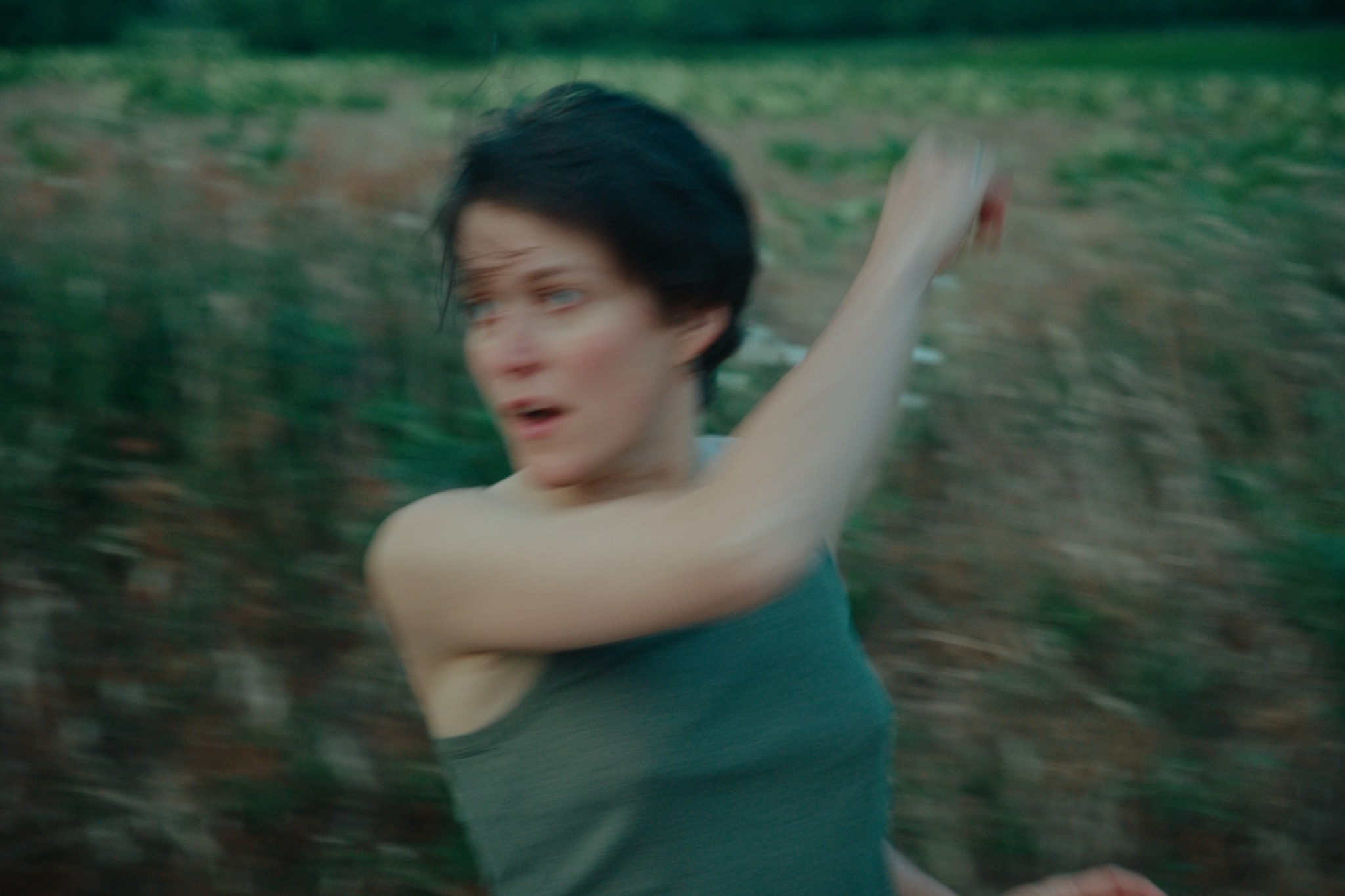
"Restlessness" serves as a key single, accompanied by a video shot in northern France under windswept conditions that proved perfect for the song's themes. As Pitou describes it, the wind calls you, sometimes even forces you to move, and in that movement, if you can find freedom, the headwind suddenly becomes wind at your back.
"Red Coat" provides another highlight where she once again hypnotizes through clipped vocals and addictive, repetitive beats. While she may channel previous indie priestesses, there's never a sense of imitation, Pitou has fully inhabited her own artistic voice.
The album closes with "Hope Song," a beautiful country-style piece where Pitou addresses hope directly: "Hope are you here? / I need to be near you." It's an ode to the force everyone needs to create dreams, relationships, careers, and the lives they want. For sure, a fitting conclusion to an album born from choosing possibility over inaction.
The result rewards both longtime fans and new listeners with music that maintains her timeless aesthetic while embracing contemporary experimentation.