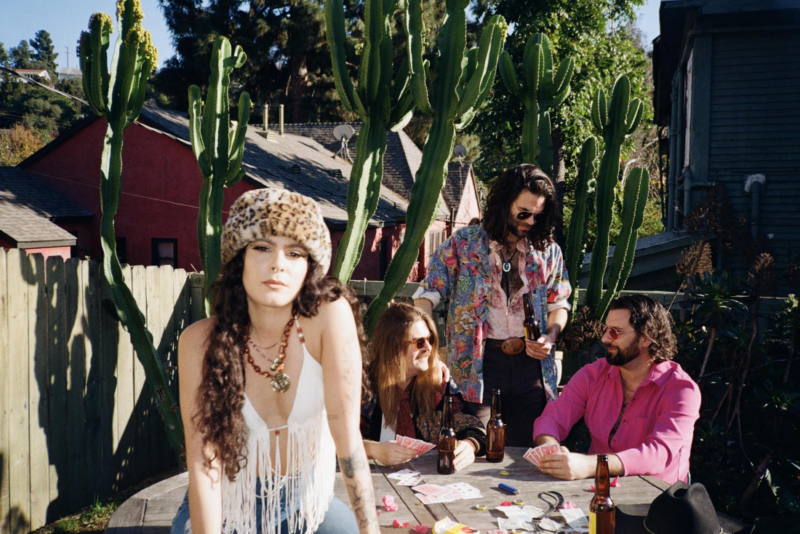
Dominique and the Diamonds make an impressive statement with Honky Tonk Queen, a debut album that embraces the traditions of classic California country-rock while confidently reshaping them for a new generation of listeners.
Drawing inspiration from the Laurel Canyon movement of the 1970s, the Los Angeles-based band delivers ten songs rooted in pedal steel, warm harmonies and timeless storytelling. Rather than simply recreating a nostalgic sound, the record breathes new life into it through personal narratives and perspectives that broaden the genre's landscape.
At the center of the album is Dominique Gomez, whose expressive vocals anchor every track with equal measures of tenderness and conviction. Throughout Honky Tonk Queen, her performances effortlessly shift from vulnerable ballads to spirited country-rock anthems, creating an emotional journey that feels cohesive from beginning to end.
The album opens with "White Sage," an inviting introduction that balances optimism with quiet reflection. From there, the title track, "Honky Tonk Queen," delivers one of the record's most infectious moments. Packed with twang, swagger and classic country storytelling, it celebrates resilience through the tale of a woman who transforms heartbreak into independence.
One of the album's liveliest tracks arrives with "Cocaine," a playful country-rock number inspired by a real-life encounter. Filled with vintage rock influences and an unmistakable sense of fun, the song captures the freewheeling spirit that runs throughout much of the record without sacrificing its sharp songwriting.
Elsewhere, Honky Tonk Queen reveals its emotional depth. "Mi Corazón" blends English and Spanish lyrics into a heartfelt ballad that reflects Gomez's Colombian heritage while exploring themes of identity, belonging and self-expression. The song stands as one of the album's most personal moments, demonstrating how country music continues to evolve through diverse voices and experiences.
Traditional influences remain an important part of the band's identity. Their rendition of "Deep Elem Blues" pays tribute to American folk and country history while fitting naturally alongside the original material. Instrumental track "Rowdy" provides an energetic interlude before the record transitions into darker territory with the haunting western ballad "Not The One."
Friendship, loss and personal growth become recurring themes during the album's second half. "Girl I Used to Know" examines the difficult reality of outgrowing important relationships, while "Waitin' For Me" offers one of the collection's most reflective performances, written during a period of significant health challenges.
The closing song, "I Don't Mind," serves as an especially fitting finale. Looking back on leaving an unhealthy chapter behind in pursuit of a new life in Los Angeles, it captures the album's overarching message of perseverance and transformation. Rather than dwelling on regret, it closes the record with acceptance and optimism.
The recording process also contributes to the album's distinctive character. Tracked at Skyforest Sound in Crestline, California, the sessions utilized analog tape alongside vintage keyboards and classic instrumentation, giving the songs a warmth that recalls country-rock's golden era without sounding dated.
What ultimately makes Honky Tonk Queen stand out is its balance of tradition and individuality. The band clearly reveres the artists who helped define the California country-rock sound, yet never feels confined by those influences. Instead, Dominique and the Diamonds present a debut that honors the past while confidently carving out their own place within contemporary Americana and country music.
For listeners who appreciate thoughtful songwriting, authentic musicianship and a fresh perspective on classic country-rock, Honky Tonk Queen is an impressive introduction to a band that feels poised for an exciting future.