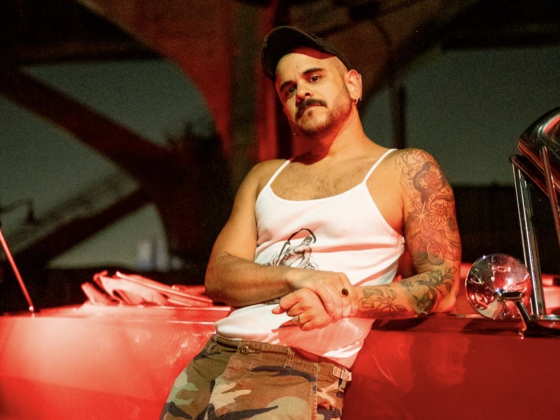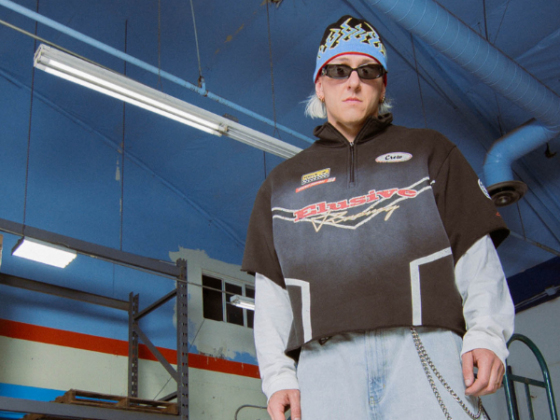
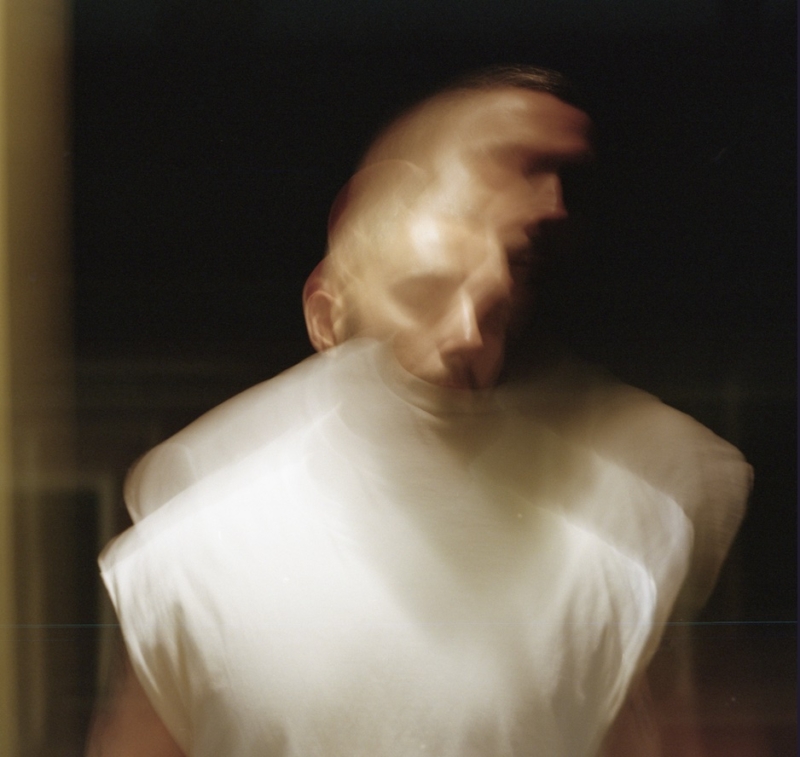
Los Angeles based artist, producer, songwriter, and multi-instrumentalist Tony Pops just released his new album See You When I See You. Leaning into darker moods and adventurous production, the project captures the volatile feeling of finding your footing while the ground moves under you.
See You When I See You is a sonic journey through anxiety, reflection, and powerful flashes of release. The songs arrive bruised and luminous at the same time. Voices are chopped into shards, synths tremble at the edges, and drums, bass, and guitar all beat like a stubborn heart underneath all the circuitry. The album's title, borrowed from a seemingly casual throwaway line, becomes the lens for the entire project. The opening track, “Pain Is Running Your Life,” calls out the moment you notice pain at the wheel, while the rest of the project is dedicated to what it looks like to keep moving forward anyway.
We caught up with Tony Pops to talk about his new album See You When I See You, writing music for Netflix and FX, and his approach to songwriting and producing.
"See You When I See You" started as a casual phrase but grew into something much heavier for you. When did you realize it was actually the emotional core of the record and not just a song title?
It started as something I just said, casual, almost automatic. But phrases have a way of revealing themselves over time. The more I sat with it, the more I realized it was showing up everywhere in my life. Loss, distance, longing, even the relationship I have with myself. By the time I understood what it actually meant to me, the album had already been built around it.
You’ve described this album as your darkest and most sonically adventurous work so far. What was happening in your life that pushed you into that space, and was there a moment where you thought, “If I go here, I can’t pull back”?
The longer I write and make music, the closer I get to my own voice. I’m still learning to push myself into uncomfortable places- and the more I do that, the more excited I get about making music. Especially when I’m navigating through the hard stuff. My ex passed away, along with a couple of old friends. My father got sick again. I went through a breakup. I hit a lot of low points that made me question everything- what I’m doing, what comes next. But I’m becoming more vulnerable and less afraid to say what I want and create what I want. At some point I realized that creating for myself is what matters. If I’m this deep and this committed, I’m going all the way.
The opening track, “Pain Is Running Your Life,” feels like a thesis statement for the whole project. What was the first line or sound that unlocked that song, and how did it reshape what the rest of the album needed to be?
When I started building that chord structure, I knew immediately it was going to be a giant build. Playing those chords hit me emotionally in a way where I needed it to translate, to feel like a beautiful, chaotic journey. Getting bigger and louder until it all broke through the ceiling. I almost knew exactly what it was going to be before I finished it. It came together through pure emotion, not many words. It still hits me the same way it did when I first wrote it. That song became the thread that tied everything else together.
You talk about the record not being about answers, but about moving through uncertainty and trying to find small moments of joy. Is there a specific song on the album that best represents that tension between heaviness and hope for you personally?
“Now” lives in that space for me, right between tension and hope. There’s a liberation that happens near the end when it shifts from a full band sound to an electronic pulse with a string arrangement. The other one I keep coming back to is “Way Out.” It’s the only vocal on the album with no effects- which is actually a departure for this record, even though I have a lot more clean vocals in my older catalogue. I tracked that take really late at night, feeling pretty used up physically and emotionally. But there was a clarity there I wasn’t expecting. Almost like an acceptance of who I am, where I was in that moment. That scratch vocal ended up being the one I kept in the final mix. It just captured the feeling better than anything I tried to redo.
The album lives in this space between glitchy, distorted electronics and very human live guitars, bass, and drums. When you’re building a track, what usually comes first: the electronic skeleton or the live instrument layer that makes it feel human?
Almost everything starts on my piano these days. I bought an upright a few years ago and it’s the best thing I own. I always gravitate to that first. From there I start building chords and melody, and then I enjoy pushing it somewhere weird, running it through synths, seeing how far I can take it before it becomes something else entirely. That process has been really exciting for me.
As a producer, songwriter, and multi‑instrumentalist, how do you decide when a track is finished on a project like this?
There’s always going to be something I’d tweak. At some point you just have to get it to a place where you feel good enough to let it go. I’ve also learned that I want to share music while I’m still excited about it. I’ve sat on songs for years and the longer they sit, the less sure I am that I want to release them at all. Funny enough, I have a handful of songs that are just my voice and a piano, completely different energy than this record, but important to me. That stuff will eventually see the light of day.
You made this album during a period where, in your words, “life was constantly shifting underneath you.” How did working on these songs affect the way you moved through that time?
There were stretches where I didn’t want to do a damn thing. I wasn’t inspired, I was getting used to being alone again, and honestly I was going through it. I was out every night, partying until sunrise, taking whatever was around, sleeping with guys whose names I never caught. Multiple in a day sometimes. I was sad and I genuinely did not give a fuck. That was my version of coping and I’m not going to pretend otherwise. But when I did get around to making music, it never felt forced. Ideas would come together and I didn’t rush anything. The music was the one place where things actually made sense, and looking back, I think that’s the only reason I came out the other side of that period with something worth saying.
“See You When I See You” can mean goodbye, distance, hope, or acceptance depending on where you’re standing. When you think about that phrase now, after finishing the record, which version of it feels the most true to you?
I always want to find my way back to the people who matter to me, the ones still here, and the ones who aren’t anymore. There’s also a self-reflective side to it: wanting to be a better version of myself, and actually believing that’s possible. There’s always a thread of sadness when I think about it. But there’s hope there too.
Your music has already landed in shows like Netflix’s Elite and Monarca and FX’s Better Things, and you’ve performed on stages like LA Pride. How did those experiences shape your approach to this album?
Those placements and those stages showed me that the music connects beyond whatever box I might get put in. When your song ends up in a scene on a show, it’s doing emotional work for someone who has no idea who you are yet, and that’s a profound thing. It made me less precious about genre and more focused on feel. LA Pride reminded me that there’s a community that shows up for you. I carried that into this record. I stopped trying to make something that fit and just made something that was honest. If it lands, it lands.
If someone’s first introduction to you is “See You When I See You,” what do you hope they understand about you as an artist?
That I make music how I want, when I want. I like being weird. A lot of my other work sounds pretty different from this album, I didn't make these songs for radio or for a trend. It's an experimental electronic record with fun parts, cinematic parts, sad parts, and some genuinely unhinged glitchy instrumental moments. I'm a queer artist with influences all over the place – one minute it's Prodigy, the next it's Stevie Wonder. Slipknot to Donna Summer, Nick Drake to Nas. I contain multitudes. I'm a lot, but I'm a good time.
*photo credit by Fabian Rubio
Connect with Tony Pops: INSTAGRAM