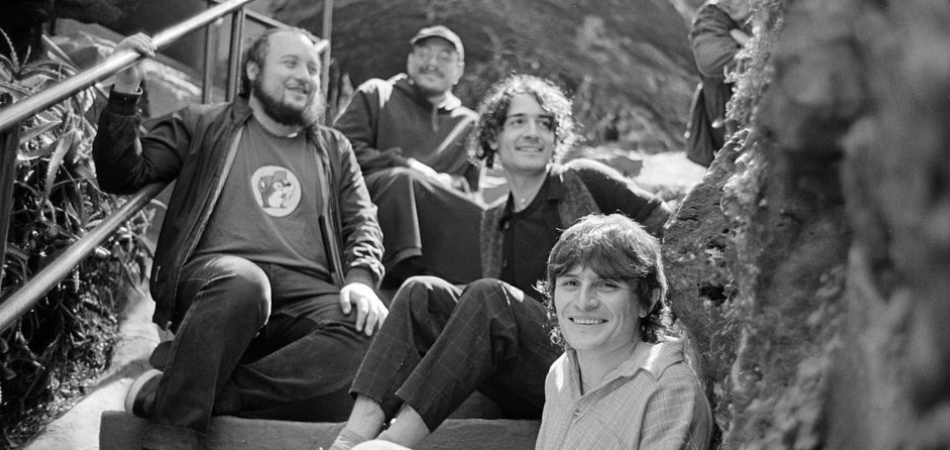


Five-piece Mexico City-based band Diles que no me maten have released their new album, Escrito en Agua.
A moody ten-track LP that encompasses Mexican music traditions and post-rock, Escrito en Agua is equal parts art-rock and flowing jazz orchestra, tightly tied together to create something sonically very special.
If there’s one thing to know about Diles que no me maten, it’s that they’re unpredictable. Made up of vocalist/saxophonist Jonás Dérbez, drummer Raúl Ponce, guitarist, bassist, and brass player Gerardo Ponce, guitarist and clarinetist Jerónimo Elizondo-García, and bassist Andrés Lupone, Diles que no me maten are all multi-instrumentalists who refuse to be tied to just one style or idea.
The band’s approach to writing and performing is one of seeing what comes next, but not to the point where it doesn’t seem considered or like they’re just throwing everything at the wall and seeing what sticks.
For Escrito en Agua, the approach this time seems to be much more jazz-based than their usual psych rock sensibilities, but they haven’t lost their post-rock edge in the mix.
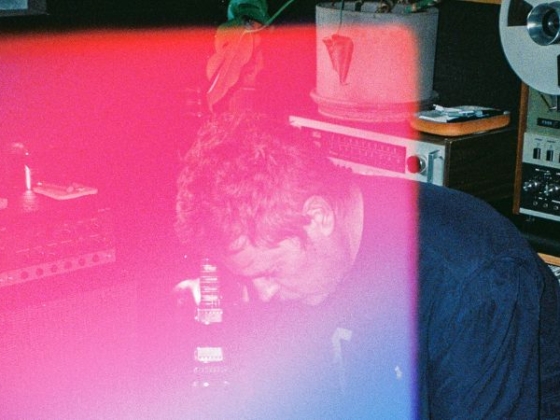
Recorded in a makeshift studio space in Mexico City’s Santa Maria La Ribera neighbourhood, Diles que no me maten went through a process of intense experimentation and refinement while putting together the album, alongside producer Sebastián Rojas.
This sense of freedom and having a more relaxed, personal space to put together the album seems to have bred some moments of absolute beauty on the album, in particular the minute-long, all woodwind track “La rata modesta”, the gentle spoken words of “Perquisidor” that builds itself up over four minutes to an almost deafening mix of instruments before retreating, or the truly gorgeous finger-picked looping guitar of “Kilómetros Dentro de un Túnel.”
If you’re as musically adept as a band like Diles que no me maten, there truly is something gorgeous to be found in the uncertainty of loose collaboration like this.
Escrito en Agua definitely feels like something new for Diles, seeing them experiment with putting poetry to music, such as on the high-octane “Hiriku,” which sees the band interpret José Vincente Anaya’s cult classic poetic vision quest Hikuri (Peyote) all while the band play a tightly controlled rhythm that feels both deeply insistent and somewhat paranoid, all gentle guitars hidden in the background of unrelenting percussion.
Escrito en Agua takes a moment of relative simplicity halfway through, on the final pre-release single “Viene el Viento” (trans. “The Wind is Coming”). Sweet and tender even while being openly about ageing, death, and the experience of life getting more difficult as youth slips further and further away.
According to vocalist and saxophonist Jonás Derbez: “It’s a song about growing old and bitter. Or, maybe how not to. Or, more about how in the end, it’s also the beginning.”
The music video, which was directed by Edson Reyes, is about the mundanity of normal life, particularly of his family of farmers in Jalisco, Mexico. The track was also the first that Diles recorded for Escrito en Agua, and is the focal point from which the rest of the album flows.
However, the album’s true emotional heart lies within “No Me,” which finds Dérbez delivering powerful lyrics such as, “No me está rompiendo / Creo que no me va a romper” (“It’s not breaking me / I believe it won’t break me”).
This mantra, which is repeated several times through different moods – confident, then faltering, then more confident again – is not only familiar but absolutely devastating to any listener who’s ever had to talk themselves through something. Perhaps tellingly, “No me” itself had to be recorded several times, in more than one location, and one which Diles que no me maten feels most proud of.
“It’s a song where we listen to each other a lot while playing, and when we’re on tour, and we’re playing everyday and we have different feelings or a common feeling, we play that song, and it’s like, ‘Okay, we understand’. That’s why it’s so important,” says Dérbez.
The album finishes up on the looping, pondering track “Tunuwame,” which is named for Tunuwame, the patron of singers and musicians in indigenous Mexican tradition.
At seven minutes long, “Tunuwame” gives all of Diles a chance to play any number of instruments, eventually closing on a prolonged, gentle fade out, as if the band are playing live and closing out their set just for listeners.
Complex and deeply emotional, Escrito en Agua is a piece of art in the truest sense; it journeys through styles and feelings and instruments and varied vocal performances, but all of it works together and works well, and needs repeated listens to fully appreciate how special it is.
Connect with Diles que no me maten: Instagram