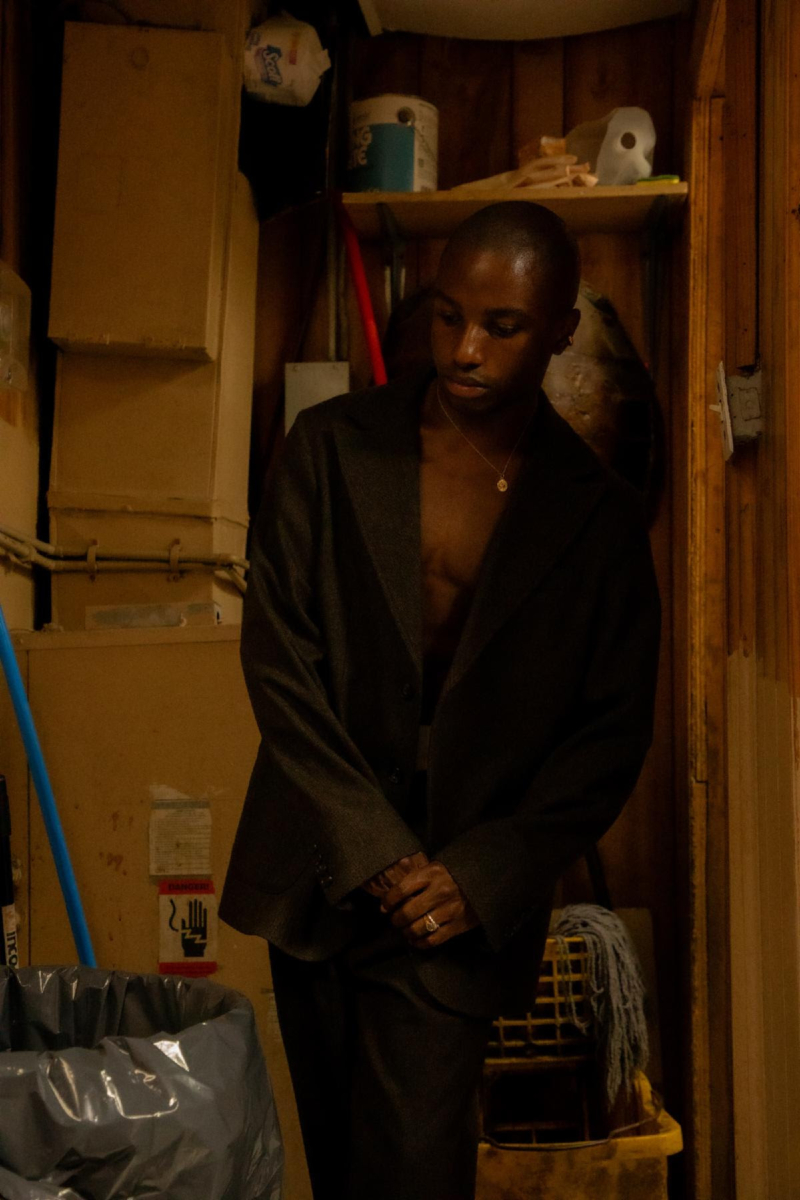
The first time I heard Rum.gold’s voice, my spine snapped straight into place like I’d been electrocuted. Everything else—background noise, passing thoughts, the room itself—faded until all that remained was the sound. R&B's structure and commitment to highlight only the most talented vocalists allows for some artists to command that kind of attention, but with a stanza, Rum.gold had me suspended in place and listening closer. The preview of his third studio album, Is There Anybody Home? Part 2 carries that same intentionality on every track, making this lyrical taste test feel like a private invitation into Rum.gold’s home before the rest of the guest list arrives.
Raised in Washington, D.C. against the backdrop of ’90s R&B, Rum.gold (born Delonte Drumgold) writes within the emotional vocabulary of the genre, exploring trauma, Blackness, queerness, love, and longing. Yet his approach feels distinctly his own. Since emerging in 2018, rum.gold has become a compelling voice in alt-R&B. He first built a following by uploading songs anonymously to SoundCloud, where listeners gravitated toward his haunting falsetto vocals as well as the questions he posed about identity, family, and personal growth. Today, his albums and EPs are still reaching a new audience that’s eager for the authenticity he brings to each project.
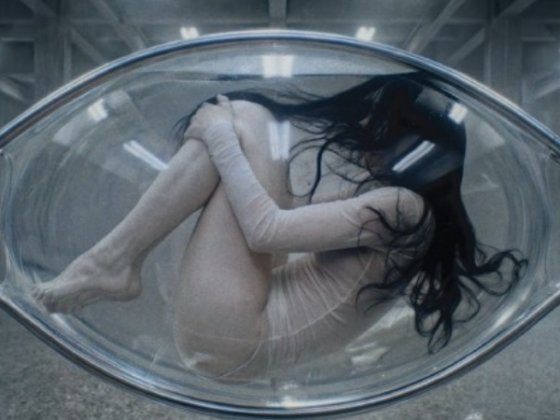
Is There Anybody Home? Part 2 has high production value, where each theme is given room to breathe through reflection rather than straightforward confessions. It opens with the single “Is It Something I Said.” The track and video explore generational trauma through an intimate narrative of a mother and son overwhelmed by mental health struggles (anxiety, depression, unresolved grief, and hoarding). As a listener, my ears traced the ebb and flow of his piercing falsetto like a soundhound seeking its siren, but I also found myself not just singing along and memorizing the vocal runs, but truly wanting to understand the lyrics, too.
In the music video, the mother spends her life filling their home with collectibles, antiques, and trash. As the video progresses, the now adult son, represented as Rum.gold, inherits both her belongings and compulsions. The song reflects on how the emotional environments we grow up in often become the ones we recreate as adults. The message is clear: the inescapable weight of generational trauma has victims, and most are living among us in the aftermath.
In an interview with Office Magazine, Rum.gold expounded on this narrative, “I knew I wanted to make a video about inheriting baggage from our childhoods — the stuff we carry from our parents into adulthood. I landed on the Hoarders concept because it felt like the perfect metaphor for generational trauma. With hoarding, you can actually see the baggage and the effects it has on a person, because it’s quite literally piling up.”
The second single from the album “Love Me Better” lands almost like a salute to Frank Ocean's producing. The opening stanza repeats itself four times throughout the song like a mantra or a reminder that rum.gold isn’t perfect, but he’s trying to be better.
Good guy
With a bad side
I'm a fiend
Human
Not a savior
Not a king
I'm a bastard
And the man
That you see
Isn't me
Another highly stylized single, there are three moments where the vocal track is paused to include the chaos of a group of people arguing. Paired with the introspective lyrics, it blends in a way that makes sense. With each release, Rum.gold continues to prove that he's what's been missing in alt-R&B. His forthcoming album Is There Anybody Home? drops on March 27th.
Follow Rum.gold on social: INSTAGRAM, TIKTOK, and X.